

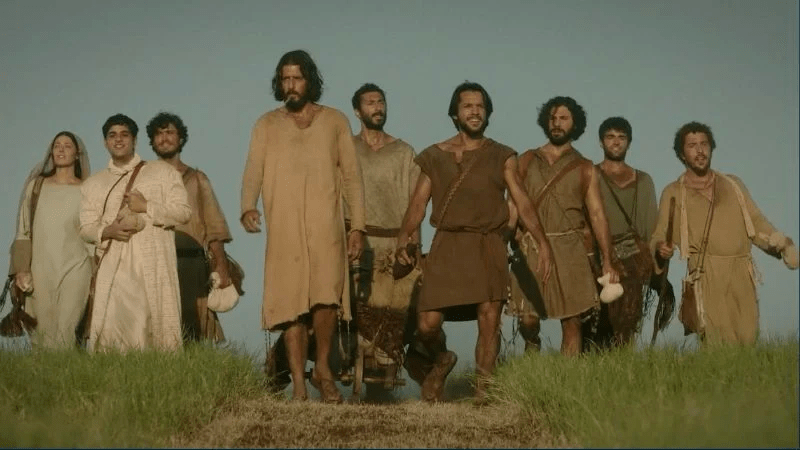
The Chosen is a streaming TV drama based on the Christian Bible from showrunner, writer, and director Dallas Jenkins.
With the Season Three finale right around the corner, I thought I’d join the hundreds (thousands?) who have shared their thoughts on the latest Christian phenomena online. I’ll be reviewing this season tonight, season 2 on Sunday night, and season 3 on Tuesday night. I first watched the show two years ago, in the winter of 2021, right before the second season came out. I’m glad I did. I’ve been wowed, awed, and overjoyed to watch this show come out. All of its success is deserved.
(EDIT: You can also read my Season Two, Three, and Four reviews!)
However, this is a review, after all. I’ve got to have some criticism! So, I’ve split this review into three categories. The first is the show as a show. How is its plot? How are its characters? How are the performances? What stands out? What seems unnecessary or superfluous? Second, I’ll talk about this show as an adaption. It’s adapting the Bible, after all. Does it do the Scriptures justice? What decisions are weird, what are just against my personal preference, and what might be bad? Are there any? We’ll see! Finally, I’ll talk briefly about the impact of the show, and its achievements.
The Show as a Show
There’s one thing to get out of the way with this show. For a “Jesus show,” this show is just plain entertaining.
Yes, its goal is to illustrate and enliven the Holy Bible, not because it needs it, but because there were real stories behind these people. How did they get to know each other? How did they interact? What attracted them or drove them away from Jesus? (The showrunners are Evangelical Christians, and so they take the accounts in the Christian Bible at face value.) Yet in doing so, the creators of the show have also just made… a good show. Crazy, right?
It’s dramatic. It’s enthralling. It’s engaging. It’s hilarious. It’s heartwarming. It’s all those good things, wrapped up into one.
The Standout Moments
Some standout moments. (Spoilers ahead, by the way.)
The sequence at the end of episode one is often talked about, but that’s because it deserves it. Mary Magdalene’s exorcism brings so much hope and life into a show that had been fairly intense and depressing so far. The show is great at mood changes, taking all of the intense buildup piece by piece until resolving it in a way that you couldn’t have seen before (unless, of course, you know your Bible… but even then, this show is great at surprises.)
The Shabbat (Sabbath) dinner at the end of episode two so clearly illustrates the differences Jesus was talking about in Luke 14:17-14. It’s that type of show-don’t-tell that really builds both the world and the characters in the show.
Episode three is just so heartwarmingly wonderful. It’s my wife’s favorite. Enough said.
The catch of fish in episode four shows their strength in resolving multiple-episode storylines that weave several characters together; oh, and the whole Cana water-to-wine adds such a personal dimension to Jesus’ miracles since he knew the couple personally in the wedding; and too, the twin healings in six have great suspense-building, and Matthew’s call in seven is another multiple episode standout, and the woman at the well in eight showcases how well they can quickly get to the point of a person, while building tension, yet still let you fall in love with Jesus… can you tell that I like this show?
The Standout Characters
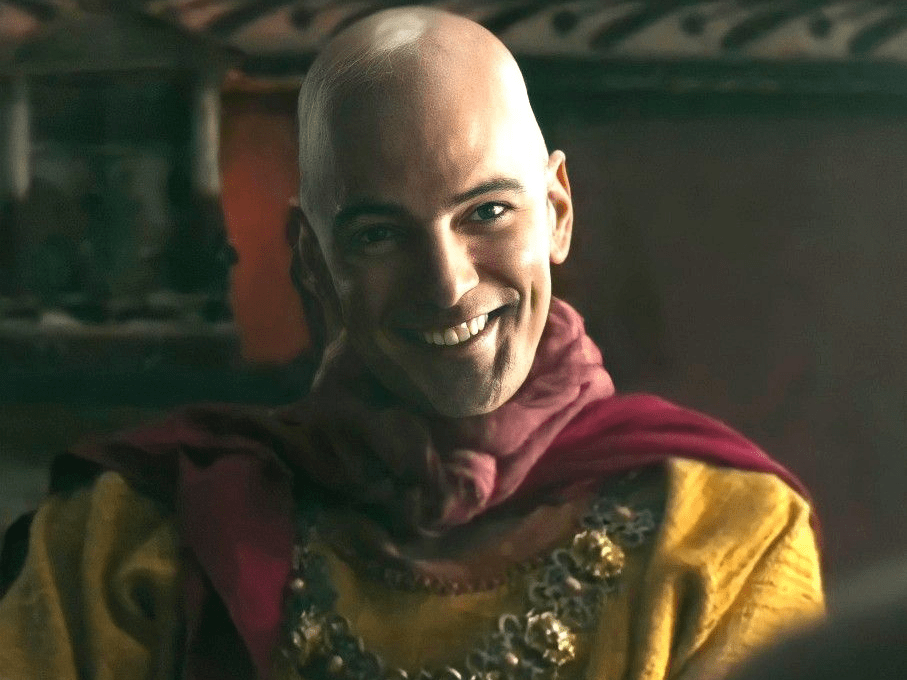
Some of my favorite characters are the “big” characters, too.
Shahar Isaac plays big as Simon Peter; he’s got a big personality and is always dominant in whatever conversation he’s in. He’s not without his soft side, but he’s definitely a “bigger” performance.
Paras Patel plays Matthew the Tax Collector and Gospel-writer as someone on the Autism Spectrum, a unique turn (we’ll discuss the choice itself later in adaption) that steals any scene he’s in.
Mother Mary’s actress, Vanessa Benavente, doesn’t get to show much range on the show; she’s pretty much kind and gentle thoughout. However, she does kind and gentle well.
Mary Magdalene, played by Elizabeth Tabish, gets to enjoy character extremes in the show; from demon-possessed in the beginning, to meek disciple later.
My favorite “big” performance, though, is Brandon Potter as Quintus, the Roman Praetor of Capernaum. You can tell Brandon is having an absolute blast with the character. He’s fictional, never mentioned in the Scriptures, but he serves as an embodiment of everything Rome was and represented to the people; cold callousness, brutal efficiency, and having a whale of a time while doing it.
The Quiet Moments
I could go on—each episode has its big moments; however, they also have their quiet ones. Episode five is full of these, as an example.
The whole Cana wedding showcases how they can take their time enjoying the interactions of these characters. Thaddeus’s conversation with Mary and Little James in episode five about stonemasonry is quiet, yet it brings these little-known disciples to life in a unique way. The montage of the characters enjoying the party brings life to people that, for many, simply sit on a page. It’s so cute to watch Jesus playing games with the kids in the background. Earlier that episode, Eden listening to a breathless Simon explain his new calling is so encouraging after the drama in the first half of the season.
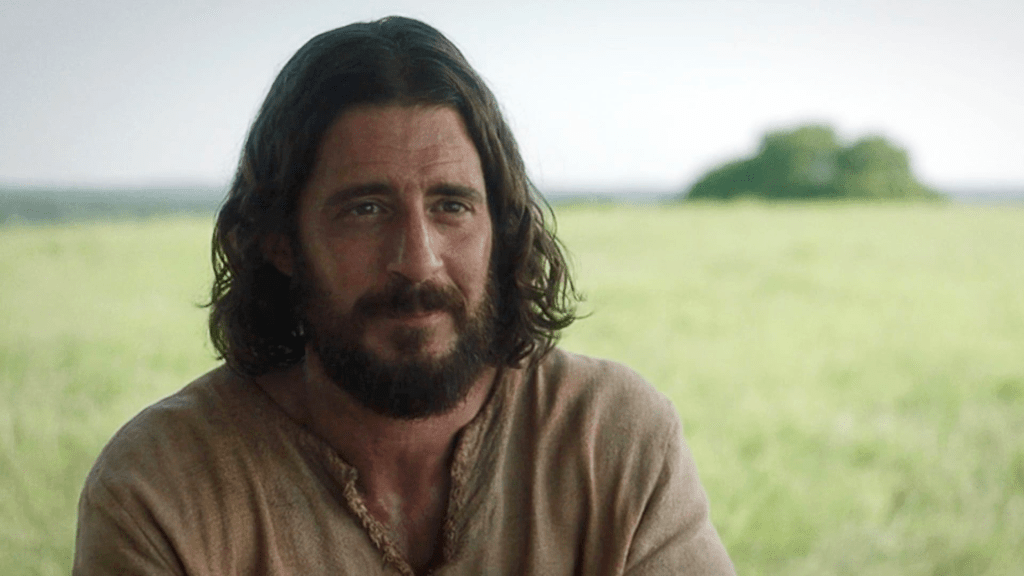
They Get Streaming Shows
The second half of the season is, in general, more hopeful than the first half, which structurally is a welcome change of pace.
The first half of the show can get hard to watch, especially on rewatches I’ve had. However, it’s clear that in this, these creators get streaming shows. They understand that a streaming show is basically a six to seven hour movie.
In a show with 20 episodes in a season—say, CW’s Arrow on the dramatic side, The Office on a comedic side—each episode has to be more of the same. Each episode has to be self-contained; viewers can stumble in on any point, and at least have the gist of what’s going on. The show has a premise, a tone, an identity, and more or less needs to stick with that each episode. Yes, it ebbs and flows, usually with a twist halfway through the season where some character loses their job or another character gets stabbed, and then a big two-part finale at the end. But overall, each episode has to stay self-contained.
In a streaming show, though, the entire season is like a single movie. Plot threads are interwoven and interconnect; two or three or four episodes in a row can be difficult or challenging, while a half of a season or the second episode of a pair can bring the tone back up again. In that way, each episode acts more like the “act” of a play; they all fit together much more cohesively to contribute to the whole. These showrunners get that, and they are masters at controlling the pace both of individual episodes as well as the seasons as a whole.
I can’t believe I got this far without mentioning the production values. Holy smokes. They only get better and better as the show goes on, but they have incredible costumes, sets, and environments, bolstered by the occasional actually impressive CGI or special affect, such as the miraculous catch of fish and the healing of the leper. Every aspect of this show is a labor of love.
The Best of the Best
The quiet “moment”—really, quiet ten minutes—that I enjoyed the most in this show by far is the conversation between Nicodemus and Jesus. Pacing wise, this thirty-minute episode is shorter than most; they usually clock in at somewhere between forty minutes and an hour. The middle third of the episode is this conversation. It’s the second last episode, and so multiple threads are colliding here. It’s the climax of Nicodemus’s character for the entire season, a trail of clues that brings him before the Messiah.
So, the episode itself and the season as a whole have been setting up this ten minute conversation.
The special effects and setting only serve the mood: the dark candlelight, the CGI animated background of Capernaum that you only notice when you see the special features, the makeup and costumes.
Not only that, but Erick Avari and Jonathan Roumie are the two consistently best performers on the show. That’s not a disservice to the other actors; there isn’t a weak casting in the bunch, and we’ve mentioned plenty of them before. However, these two have the most subtle performances, able to communicate in a narrowing of the eyes, a pat of the hand, a pause, what many actors in the business can’t in minutes of screentime. They showcase their range in this scene, from wonder to annoyance to bewilderment to kindness to fear to love.
Not to mention they are coupled with great material. Yes, it’s mostly straight out of John 3, including the all important John 3:16. But what they’re able to add, and what context they breath into the words that are pulled straight out of the Bible, makes this moment powerful.
In addition, Jesus and Nicodemus are two characters I’ve never seen before in any media I’ve watched or seen. Jesus is a Messianic figure, literally; yet he’s gentle, he’s kind, he’s empathetic. He grasps at words, looking for analogies that seem from thin air, but always manage to hit home with that person. For an example in this conversation, Nicodemus isn’t grasping being “born again from the Spirit.” Jesus looks around and hears the wind; his eyes widen, and he gets excited, using the example of the wind to illustrate the work of the Spirit. It works perfectly because he’s the Son of God, but we also get to see his human-ness as he uses his wits and wisdom in action to touch the lives of those around him.
Nicodemus is unique too. I’ve never before seen in modern fiction the religious leader, confident in his beliefs, aged, struggle with new ideas coming his way and how to acclimate them to what he’s known before. As a person of faith, this character I’ve never seen before in this way identified with me strongly. It was another cool character to see.
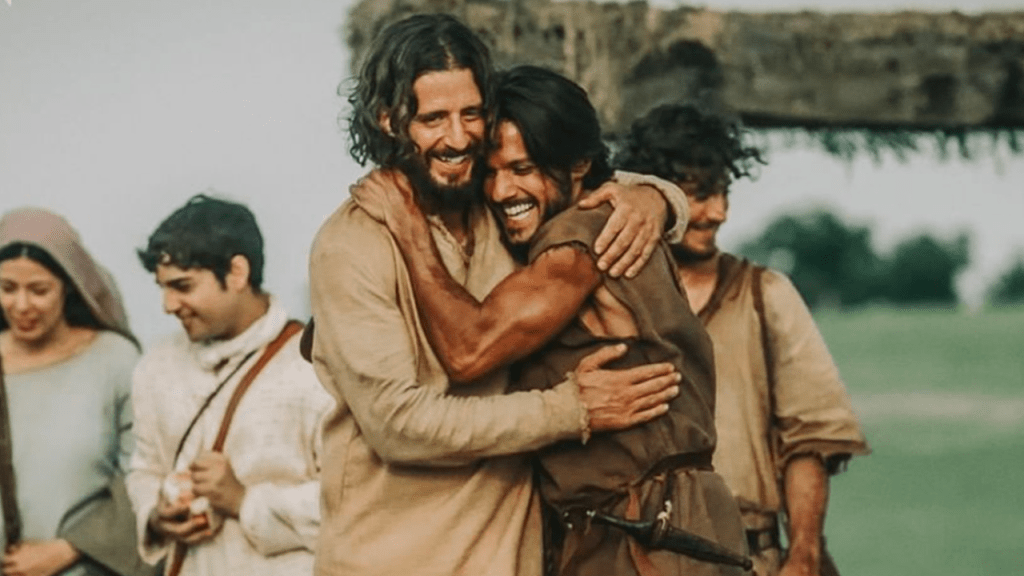
And the ending—Nicodemus quotes Psalm 2, a Psalm which both Jews and Christians believe points to the Messiah. However, he quotes it in fear; “Kiss the Son, lest he be angry, and you perish along the way,” he says, kissing Jesus’s hand. But Jesus pulls him to his feet, tears in his eyes, and finishes with the next verse of the Psalm; “Blessed are all who take refuge in him,” And he hugs the sobbing Nicodemus. God isn’t distant; the Messiah isn’t simply a mighty king; he’s also his friend. It’s an aspect of Jesus the show leans into with all its might.
As it pulls in Psalm 2, and as it leans into a particular part of who we know Jesus to be, the show makes choices. It’s those choices in particular that interest me both as a Christian and as a lover of entertainment.
The Show as an Adaption
With the praise of the show as a show out of the way, I also want to talk about some of its adaptational choices. How does it relate to the Bible? How does it use it? What does it add, what does it take away? What are its goals?
These questions lead to some cool decisions on the showrunners’ part. There are a few decisions, though, that I do disagree with, mainly because the show is so careful in so many ways that I scratch my chin and am left to wonder, “Why?”
The Cool Decisions
The cool decisions are those involving making this content into a show. For example, Nicodemus’s conversation with Jesus in John 3 takes place in Jerusalem, early in Jesus’ ministry but most likely before he calls his disciples. However, the show has made all of the early part of Jesus’ ministry center around Capernaum. While many of the events in his ministry appear to take place there (the healing of the paralyzed man, the calling of Peter, James, John and Andrew, the healing of Peter’s mother, and many more), this conversation doesn’t. However, they’ve altered the timelines as a show in order for us to get comfortable and acquainted with one area of the land of the Hebrews. Through this land, we see the rest of the land. It’s an adaptational choice for the sake of convenience and power in film-based storytelling.
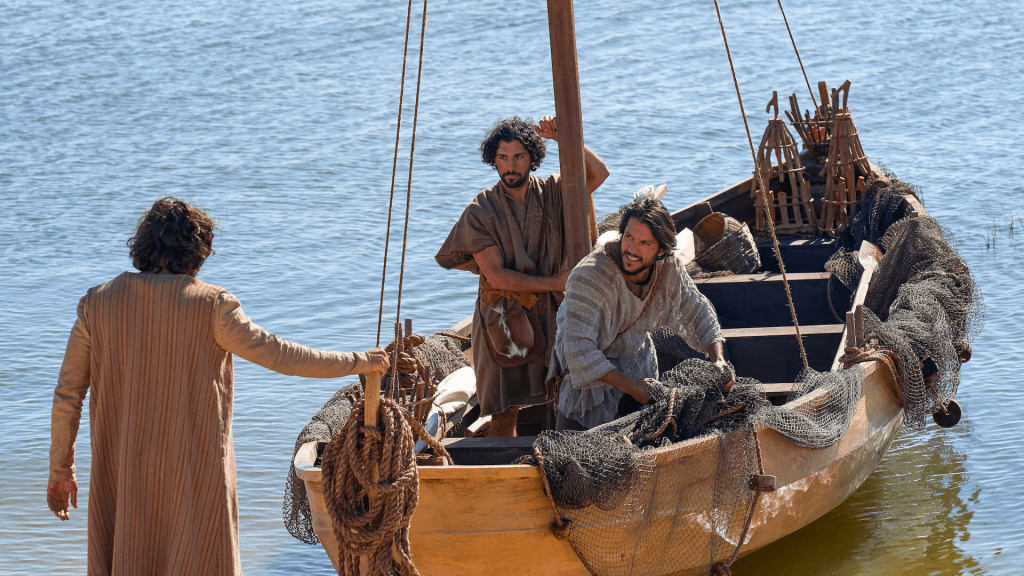
That’s just shifting around some places and timelines; even more adaptational choices are made in expanding storylines or creating new ones. We know Simon Peter had a wife because he had a mother-in-law. We know nothing about their relationship, though. How did he get along with his wife? What were the pressures of serving as a disciple? Who was Simon before his call? We have hints about Simon’s personality and disposition: he’s prideful, he’s assertive, he’s bold, he calls himself a “sinful man” when Jesus calls him so he must have some clear guilt. How did those clash with his wife? We get to see that. That expansion pulls us into the story. We don’t know what happened exactly in Simon’s life; but something did happen. This show feels free to speculate about that.
This show is also really great at tying in Old Testament references. I mentioned the Psalm 2 reference before with Nicodemus, but there are many more: the establishment of the Sabbath, the Bronze Serpent and Moses, Jacob’s Well. They even bring in the Intertestimental Period so the a reference to the Maccabees. Their knowledge of the Bible is obviously vast and cohesive.
The final adaptational choice beyond those with storytelling goals or enlivening goals are those with what I’ll call “vision” goals. That’s like the decision to make Matthew on the autism spectrum. Did Matthew the Disciple of Jesus had autism? I, honestly, think there is little chance that he did. So, why make the character this way? Yes, we see in the Gospels some signs that point to Matthew being socially unaware or obsessed with organization and numbers. However, that is not close to autism. So why?
Because of a vision goal. Dallas Jenkins and the showrunners want to show a vision of God’s people, that God includes all. One of those people he included was a former tax collector. To show us what that means in a way we understand, they chose to make that character also have autism. In that way, they are communicating to us the extremeness of Matthew’s inclusion in the disciples, and giving us a vision of how God’s people can include people now. Did Matthew have autism? Probably not. But does the inclusion of Matthew show us how we can include people who are different even until today? Absolutely yes.
The Questionable Decisions
What about those questionable decisions?
For this season, I don’t have much. I have other concerns about seasons 2 and 3 that I’ll get to in their respective reviews. But here, I have only one.
I am a history nerd: someone who writes a review of Les Miserables (the book, not the musical) wouldn’t be otherwise. Knowing the history of the time of Jesus, some of their decisions simply don’t make sense.
I love Brandon Potter’s Quintus. But he wouldn’t exist. Roman Propraetor were governors of entire provinces, often the size of modern US states; Praetor were governors in Rome or Italy itself. However, Judea, Galilee, and Samaria were client kingdoms of the Roman administration; they were never ruled directly until after the Fall of Jerusalem in 70 AD. Even Pilate, who took over for one of the Herod’s as governor over Judea, did not rule directly. He left most of the responsibilities to the Sanhedrin, a type of autonomous governing Judean body made up of priests, Pharisees, and Sadducees. He only interfered when he needed to… say, when the death penalty needed to be invoked. So, the soldiers in Capernaum would’ve been soldiers hired by Kind Herod, most probably Idumean locals (Edomites, great-great-great… grandsons of Jacob’s brother Esau) or Egyptian and Syrian auxiliaries, soldiers who were done in the Roman army but wanted some work closer to home. I understand you need to make things simpler for an adaption; but the presence of Rome in general is greatly exaggerated.
There’s obviously a point in this. The showrunners believe that one of the key aspects of Jews at the time of Jesus was the expectation of the Jewish Messiah to be a great ruler who would overthrow the Romans. That is present in the Bible (see John 6:15). However, in the process of bringing out that context, they don’t seem to pay as much attention to the Romans and non-Jews as they do to the Jews. That’s a little sad to me.
Also, none of the Romans wear their armor right; they don’t tie their chin straps and wear their breastplates backwards. When every costume for the Jews has so much detail and love put into it, and every part of their culture is so carefully paid attention to (including kissing doors as you leave because of the Bible writings on them!!), you’d hope they could put Roman armor on right. They’d pay more attention to Roman culture, Greek organization, and the government of other people besides the Jews at the time. Little salty on that one, I know, but it irks me every time.
The Conclusion
I love this show. You should too.
Besides its obvious value as vehicle for Christianity, it’s just simply an entertaining show with so much effort and time and love put into it. The writers clearly care about making a good show, and they’ve done that. I love (most of) the choices they’ve made to adapt it.
As the show continues picking up steam toward the end of season 3, I’m so happy to be along for the ride. If they keep up the quality as they have this season, it’ll be more than worth it.

𝙷𝚒! 𝙼𝚢 𝚗𝚊𝚖𝚎 𝚒𝚜 𝙽𝚊𝚝𝚑𝚊𝚗. 𝙸 𝚕𝚘𝚟𝚎 𝚜𝚝𝚘𝚛𝚢𝚝𝚎𝚕𝚕𝚒𝚗𝚐, 𝚕𝚎𝚊𝚛𝚗𝚒𝚗𝚐, 𝚊𝚗𝚍 𝚌𝚛𝚎𝚊𝚝𝚒𝚗𝚐, 𝚊𝚗𝚍 𝚊𝚕𝚜𝚘 𝚕𝚘𝚟𝚎 𝚝𝚘 𝚝𝚊𝚕𝚔 𝚊𝚋𝚘𝚞𝚝 𝚝𝚑𝚎𝚖 (𝚜𝚘𝚖𝚎 𝚠𝚘𝚞𝚕𝚍 𝚜𝚊𝚢 𝚝𝚘𝚘 𝚖𝚞𝚌𝚑!) 𝙵𝚘𝚕𝚕𝚘𝚠 𝚝𝚑𝚒𝚜 𝚋𝚕𝚘𝚐 𝚝𝚘 𝚜𝚎𝚎 𝚖𝚘𝚛𝚎 𝚌𝚘𝚗𝚝𝚎𝚗𝚝!
 Go-To Guru: Film, Literature, Television, and More
Leave a comment