
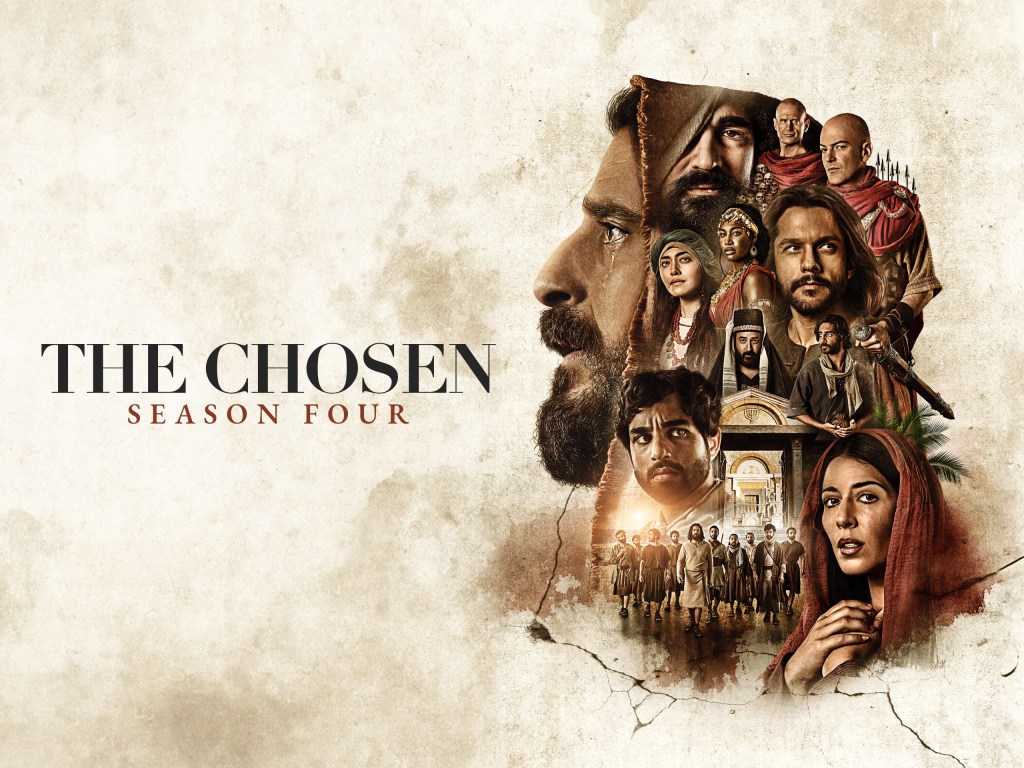
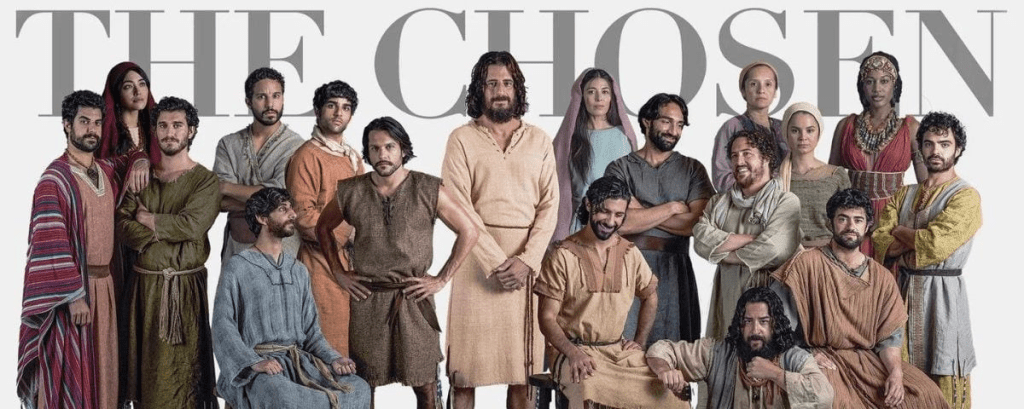
The Chosen is a streaming TV drama based on the Christian Bible from showrunner, writer, and director Dallas Jenkins.
Catch my reviews of The Chosen‘s first three seasons here, here, and here. With Season 5 just a few days away from premiering in theaters, I thought I’d finally write up a review of Season 4. While I finished it awhile ago, I’ve been stewing on a lot of thoughts about this season. I have some to this conclusion:
Season 4 has more problems than any of the previous seasons, both in manufactured drama and pacing problems, that offsets the high points of the season.
I’ve always been open to the show adding its own stories, not simply to weave together scenes from the Bible but to add its own material parallel to the Bible. The characters best impacted by this are Simon Peter and his wife (Eden in the show, unnamed in the Bible), Matthew, and Mary Magdalene (whose only speaking scene in the Bible is the resurrection account). They’ve added storylines such as Simon and Eden’s financial difficulties before Peter is a disciple, Eden’s miscarriage, Matthew’s relationship to the other disciples – especially Simon – and his parents, and Mary Magdalene’s demonic possession.
However, there are several storylines in this show that drop below the lows of Season 2. And I think the primary problem with this show now is… pacing. There are a few highlights, and I’ll get those out of the way, but there is also a lot of low points for me, adaptation-wise and story-wise. Then, there’s a whole lot of pacing problems that make the show feel bloated and relentlessly grim.
The Highlights
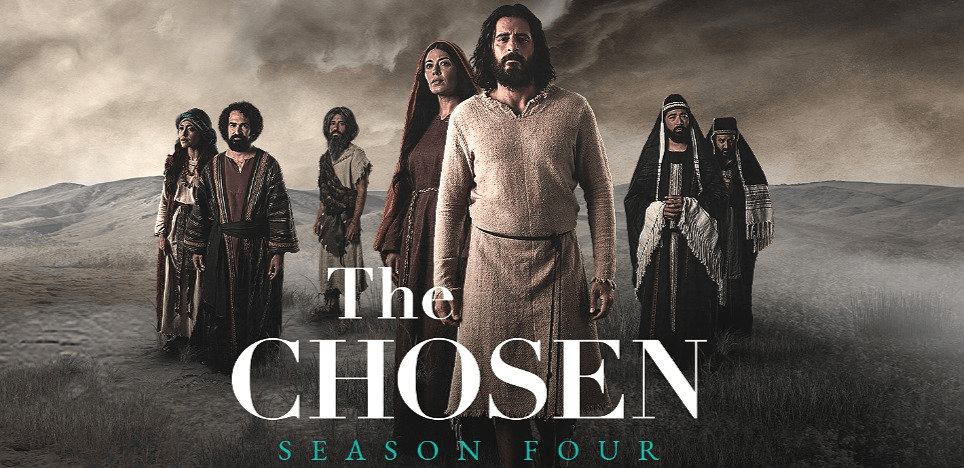
There are a few highlights to this season that I want to point out. And, surprise-surprise, it’s when the scenes are around and interconnected with Bible stories.
The first highlight that’s done well is in Season 4, episode 3. A crowd gathers in Capernaum in front of the Synagogue after Jesus heals a man born blind by putting mud on his eyes (a story that, originally, takes place in Jerusalem in John 9). The Pharisees and rabbis come out to confront Jesus and call him a false teacher. Jesus goes off, using the words of Jesus’ speech in John 9 about who is truly blind. While it’s not the best such scene in The Chosen (that would belong to the “justice and mercy” scene from Season 3), it is always fun to see this empathetic, gentler depiction of Jesus get truly angry. It really sells well because you know it’s coming from a place of such genuine love and care.
The second highlight that’s done well is in Season 4, episode 4. Finally, Gaius’s plot pays off. He finally comes to Jesus in faith, asking for the healing of his sick son, the son born of a slave and not his wife. The awkward situation has finally been overcome, and as the new Praetor (go to my Season 1 review for why that title is ahistorical, but anyways) of Capernaum he comes to Jesus and asks for healing. The show has built up this relationship over 4 seasons, and it really pays off in a big way to finally see Gaius confess that Jesus is God, and that he doesn’t even deserve to have Jesus come under his roof. The original story from Matthew 8 and Luke 7 is impactful enough, but they’ve done a great job of building it up ever since Gaius and Matthew’s awkward relationship in season 1.
The third that’s done well is in episode 5. This in particular is really cool because it’s not a strict adaptation of the Bible, per say, but a teaching of Jesus come to life. One of Jesus’ crazy commands in the Sermon on the Mount is that if someone asks you to walk one mile, go with them two miles (Matthew 5). What’s even crazier is when you know the context: Roman soldiers could ask any person they found to carry their equipment up to one mile. So, “going the extra mile” isn’t just about overachieving; it’s about cooperating excessively and graciously with a tyrannical government, partially with the hope of shaming them. And a scene in Season 4 depicts this teaching in reality. Jesus and the disciples are asked to carry the gear of Roman soldiers, which they all but Jesus protest. Then, when the time comes to leave the gear behind, Jesus keeps walking. The jeers and inappropriate jokes of the soldiers becomes awkward shuffles and silence. Eventually the soldiers take their gear back and walk away. It’s a really cool depiction of the Bible teaching that I’ve already seen shown in churches and Christian schools. It’s very vivid and very cool to see, especially as it plays into a theme of this season: “What kind of Messiah is Jesus going to be?”
The fourth and final is the entire scene depicting the anointing of Jesus by Mary of Bethany. Like Gaius, this involves bringing the John 11 / Luke 7 / Matthew 26 / Mark 14 story to life using surrounding scenes. In this, the showrunners answer: “How did Mary get the money to pay for an oil that cost half a year’s wages?” They depict both how Mary got that money in a logical way, show her buying the bottle in a fun haggling scene, and then show the shock and awe as Jesus is anointed by Mary before, of all people, Yusef and Shmiel. Again, they are using a real scene from the Bible but wrapping multiple scenes and storylines around it to bring it to life.
And unfortunately, those are the highlights of the season. Notice how far apart and how few and far between they are. Because this season suffers from two problems: Storylines that aren’t well thought out, storylines that aren’t well paced.
The Low… lights?
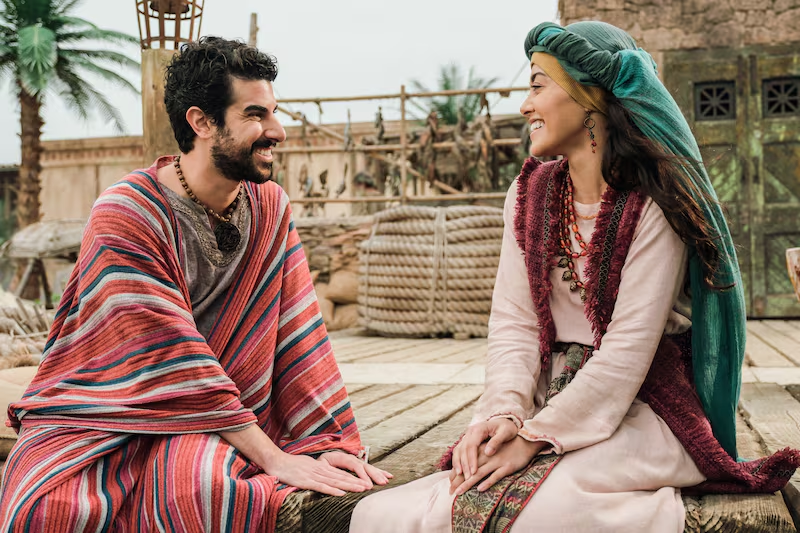
While this season is full of many “low-points,” many of these low points are also poorly thought out and executed. I think in several situations, the showrunners like Dallas Jenkins and his writers could have used a few more drafts to really iron out the logistics of some of these scenes.
Ok, I’ve got to do it again (as I’ve done in every review so far), this season has a really really messed up timeline. Again. The showrunners throw in random time markers that are just so strange and contradictory that I don’t know if they have a calendar written down anywhere for the show. As I write, every time I feel inclined to place a time marker (“That was ____ days ago!” Jane shouted), I make sure to go back over my made-up calendar and make sure that I’m not violating what I’ve said previously. This show literally breaks its own timeline all the time.
The most egregious example is in the last few episodes. In Episode 6, they celebrate Hanukkah, a Jewish festival that at its very latest starts January 6th, and we know that in AD 30 it would’ve fallen on January 3rd and lasted until January 11th (I’m assuming the show is taking 30 AD as the year of the death of Jesus, because the first season said it started 26 AD. Although, again, they have said only a year has passed since all this started, so IDK). In Episode 8, we are approaching the Jewish Festival of Passover, which in 30 AD was April 7th (there is controversy about both those dates, but we’ll roll with it). If that is true, then the two festivals are nearly 3 months, or 12 weeks, apart. However, in Episode 8, some of the disciples state that on the Sunday before the Passover (let’s say April 2nd) that Hanukkah was two weeks ago.
Wait… WHAT? What is going on with Dallas Jenkins, and his cowriters Ryan Swanson and Tyler Thompson? This is just… really lazy. I’m sorry, but there’s no other way around this. This is what writers do when they’re first starting and bumbling through logistics of writing, not what writers do after years and years of experience. Why are they so bad at timing?
And before you say, “This is really nitpicky,” the problem is that these types of things are what make your show feel real. We all experience the passage of time. We all understand that. Especially in a show that should be taking place over three years, the passage of time should be felt. We feel these characters get older, more experienced, closer together, have a history. All of those things are possibly and feel real because a writer has kept track of their timelines. They’ve made sure the stuff in the background you never think about works, so this world feels real. Or else, if it feels like the characters still don’t know each other super well, or are still spinning their wheels, or are still struggling with the same things – not in a “we’re all human” way but in a “wait, this story is coming up AGAIN?” sort of way – then it’s because time wasn’t depicted well. And The Chosen has struggled with timelines since the first season.
I’ve got one other big problem with the quality of this season. That comes in the death of Ramah, Thomas’s fiancée and lowercase-d disciple of Jesus. She has been invented for this show, and there’s a reason that is: as Dallas Jenkins said, “We knew we were coming to this moment: the reason why Doubting Thomas is Doubting Thomas.” In doing so, they turned what many commentators see as a proclamation of courage – “Let us also go to Jerusalem, that we might die with Jesus” (John 11) – into the a wish for death on the verge of suicide.
Why does this happen? Let’s go over the death of Ramah. To review the scene, this is during Jesus’ sight-blind speech to the Pharisees. A crowd, angry at the Pharisees, is on the verge of rioting. The disciples are containing the crowd, but only barely. Andrew and Thomas have an escape route if need be, but they can’t see Jesus or the other disciples. Roman Praetor Quintus arrives and demands the crowd disperse and that they arrest Jesus. When they don’t, of course, he and some of his soldiers attempt to get to Jesus, but the crowd doesn’t let them. Jesus and most of the disciples flee, but some are left behind along with Ramah and Mary. When Thomas realizes this, he and Thaddeus go back through the crowd. Meanwhile, Quintus has gotten to where Jesus was. As Thomas continues to yell for Ramah without noticing anything, 1) Quintus grabs Thaddeus and demands to know where Jesus is; 2) Quintus is in turn grabbed the crowd and separated from Thaddeus, who looks shocked; 3) Quintus, afraid of being trampled, pulls out his sword (this is one part of the sequence I actually liked; everyone but Thomas treats Quintus like he’s a madman who just brought out a gun when his sword comes out). So, 4) Thomas finds Ramah, gets to her, and pulls her out of the crowd… then passes DIRECTLY IN FRONT OF QUINTUS as the sword-wielding Roman governor that everyone just treated like a school shooter yells at him to tell him where Jesus is. I mean, directly in front of Quintus. He doesn’t go around, he doesn’t see him, see the sword, then back away. Nope. With Ramah in hand, he just walks as if he’s not even there. Ramah, too, doesn’t react to this at all. Then, Quintus pulls out his sword and stabs Ramah from behind. The crowd scatters, and Quintus is arrested by his own soldiers for violence without cause.
This is stupid on so many levels. Not because the scenario itself is stupid (although it seems to contradicts Scripture – we’ll get to that in a moment) but because Thomas, Ramah, and Quintus were all supremely stupid as soon as the search began. Yes, it makes sense for Thomas to go back in and find Ramah. No, it does not make sense for him to be so desperate in his search – which he is doing because he knows Romans are there – that he ignores the Roman who pulls out the sword and screams at him. At least go around the guy, or cut back another way. You got through the crowd much more easily than he did anyways, somehow, even though you were both traveling the direction of the crowd, so why not just go around? It makes it so all of the good suspense they just built up with the sword coming out is ruined because Thomas doesn’t treat it like everyone else does. If literally everyone treats it that seriously, why does Thomas not treat it seriously? “Oh, he’s desperate, and people do stupid things when they’re desperate!” Ok, sometimes? But when you’re scared and terrified, you don’t charge toward the most terrifying and scary guy in the room.
Then, Quintus, who doesn’t want to kill people, he just wants information from people, kills not Thomas but Ramah? Why didn’t he grab Ramah, and then say, “I will kill her if you don’t tell me where Jesus is”? Doesn’t he want information? Why not act that way? I get it, he’s desperate, too, with the crowd closing in around him and feeling disrespected, but he just had the wherewithal NOT to swipe at the entire crowd and NOT to swipe at Thomas when he first appeared literally inches from his face, so why does he drop that wherewithal now? It accomplishes literally none of his goals!
And in all of this, Ramah is treated like she has no agency at all. You don’t even get to see her face as they walk past Quintus. Why doesn’t she pull away from Thomas, or tell him to stop, or to go AROUND the sword-wielding maniac? If Thomas is so determined, Ramah doesn’t seem to be. Or, as soon as she hears Quintus scream behind her, why doesn’t she turn around or react or do anything?
What is this scene? This scene is called “manufactured end-result writing.” (I just made that up.) This is when a writer has a certain goal in mind – in this case, the death of Ramah – and moves heaven and earth to accomplish it, breaking the characters in the process. All of them act contrary to their goals, personalities, and common logic (notice I didn’t say common sense; just that in this situation, they all act like robots programmed to make stupid decisions rather than how humans would react in this situation). Thomas acts stupid. Ramah acts stupid. Quintus acts stupid. None of them make decisions in line with who they are, all to stage this oh-so-sad death scene. When the episode ended, all I said to my wife was, “That was so stupid.”
In addition, this scene directly contradicts Scripture. On the one hand, we have given the team license to do a lot of things with Scripture, including contradict it where they were cutting out some stories in order to make room for other stories, or changing situations and people involved in stories (like setting the healing of the blind man in Capernaum instead of Jerusalem. Does it contradict Scripture? Yes, because this event happened in Jerusalem. Does it really matter? For the sake of making a continuous plot, seems fine to me.) But having one of the lowercase-d disciples of Jesus die contradicts this statement Jesus prays the night before he dies:
“Holy Father, protect them by the power of your name, the name you gave me, so that they may be one as we are one. While I was with them, I protected them and kept them safe by that name you gave me. None has been lost except the one doomed to destruction so that Scripture would be fulfilled” (John 17:11-12).
You could make the argument that only uppercase-D Disciples, the Twelve, were in the upper room when Jesus prayed this. It was those eleven besides the one doomed (Judas) that he hadn’t lost. Granted. But even if Jesus is primarily talking about the Eleven + Judas, the promise still stands that Jesus protected those who were his throughout his ministry. Of course the disciples probably had friends, family members, and more die during his ministry that he could have but did not heal.
But when Peter comes up to Jesus and says, “Master, it’s time, we gotta go,” Jesus looks… confused. As if he’s unsure what’s going on. Then, once Ramah dies, Jesus goes right back to the spot where she dies even though the place should still be pouring with Roman soldiers. (BTW, since when do Romans care about due process of a non-citizen? One of the accusations against Pontius Pilate by the Jews is that he slew Jews with their sacrifices in the Temple, and he wasn’t punished. And Paul twice is wrongfully detained without a care in the world, and one time prepared to be tortured, until he reveals he is a Romans citizen – Acts 16 and 22). The soldiers should be here detaining Thomas and Ramah and still seeing where Jesus went. Yet Jesus walks up dramatically to Thomas and says, “I love you. He loves you (God the Father). I’m so sorry.” When the whole time I’m thinking, “JESUS you could be ARRESTED right now, Thomas SHOULD be arrested, and Thomas was a stupid IDIOT who got Ramah killed AND Ramah was stupid for following him… Why are YOU sorry?”
And so, another character looks stupid in this situation several times over: Jesus. And while Ramah dying might contradict John 17, Jesus looking stupid in order to set up a dramatic death scene contradicts the entire Bible. There are ways this scene could have happened that I would have been more than happy with. But it is so manufactured, so many characters act so stupid, and it does harm to Jesus. This is why this is the worst scene in the entire show.
The Pacing
The main problem with this season is its pacing. Pacing is the illusive feature of stories where they either feel fast or feel slow, and either of these can be bad or good things depending on what you’re trying to accomplish. Some times you want a story to feel fast, sometimes feel slow; sometimes they start slow and speed up, or start fast, slow down, speed up, and slow down again. This “speed” is hard to capture, but it’s often based on editing and writing decisions. How long are the pauses between characters responding to each other? How many sentences are there in a conversation, and how much information does each line of dialogue communicate? All of these add up to the feel of a story.
The first episode in this season is 56 minutes long. Every other episode is over an hour, one clocking in at 84 minutes (an hour and 24 minutes). For comparison, the entirety of the original Die Hard, including credits, is 88 minutes long. This entire season is over 9 hours long. That’s about the length of the unextended Lord of the Rings movies (although who is watching those anyways?) So… what does The Chosen do with all of this time?
Well, it wastes a lot of it.
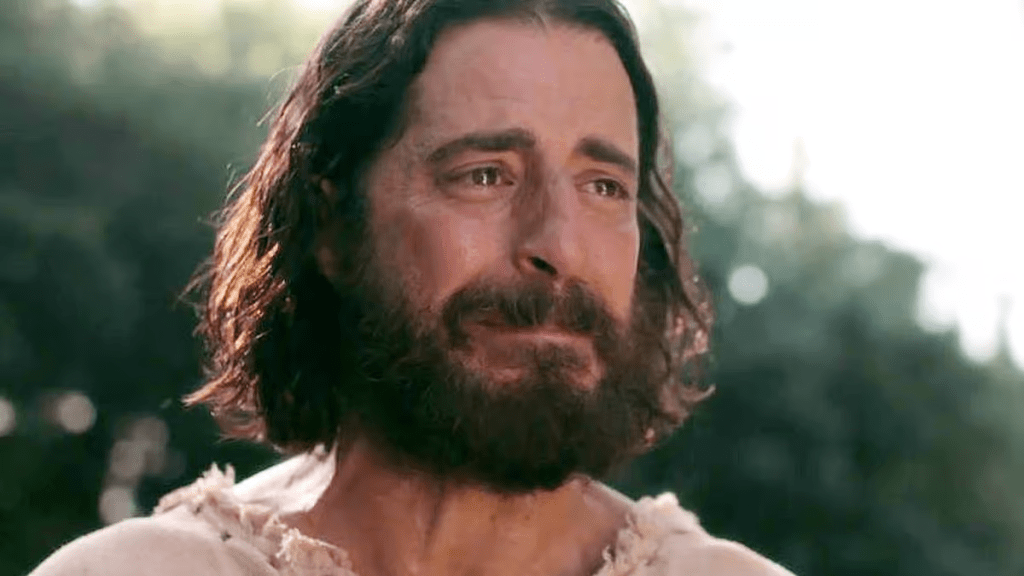
Two moments really stand out to me that demonstrate the bloat this season has. In episode 7, the resurrection of Lazarus, we have two famous scenes. The first is the 2nd shortest verse in the Bible, John 11:35: “Jesus wept” (don’t let anyone fool you: the shortest is Job 3:2, “He said,” which is only one word in Hebrew). When Jesus weeps, the scene takes multiple minutes of multi-second cuts, most 3 seconds or more. It takes the time to linger on every single reaction of every single disciple as well as the sisters of Lazarus, Mary and Martha. Now, normally, I think it’s great for media to go slower, to ruminate, to marinate on a scene and let all of the characters feel the emotion of what’s happening. However, the way it is cut and edited as well as the way it keeps going to everyone in the scene just feels… long. Later, when Lazarus is raised, the same thing happens: we see every reaction, every person, for minutes. Jesus stands outside the grave with his hand to the sky for 30 seconds before Lazarus comes out of the tomb. This sequence is one of my favorite in the entire Bible, and I started laughing at just how long we lock on Jesus standing there, still, with his hand to the sky, occasionally cutting to other people in the crowd or disciples. Again, I get dramatic build up to a dramatic moment. But when these scenes are just dragged out and dragged out, in a show that is already a pretty slow and steady show, it just feels… long. Bloated.
I didn’t go back through and go through every line of dialogue, but conversations feel longer, more aimless, less snappy. A lot of the clever, multi-sided dialogue from the first season and parts of the second is gone. The show has always had moments of Jesus walking slowly toward a character, putting a hand on them, saying something dramatic. But when this occurs multiple times, sometimes even in the same episode, it begins to feel overly ponderous and dramatic.
Another example of this is the twenty minutes we spend in the beginning of Season 4, episode 4 to grieve Ramah’s death. It’s filmed in such a way that it jumps frenetically between the “present” – where Ramah’s body is being transported back to her hometown – and the “past” – as the disciples all react to the death outside of Capernaum. It takes each disciple’s reaction in turn, first zooming in in slow motion on their face in the caravan, then jumping to their reaction or action on that tumultuous day, then jumping back to the caravan. While it’s a cool idea to picture trauma and grief as you have pieces and fractures of emotion and memory, it takes 20 minutes, takes a lot of slow motion, and takes a lot of concentrated emotion. Of course, I want the show to dwell on their reactions! But maybe the best way to do that isn’t in such a way that feels like another overly dramatic, ponderous moment in a season full of overly dramatic, ponderous moments?
It makes me wonder that, now that the show has a bigger budget, there aren’t as many restraints as there used to be. They say that the best art comes from restraint and restrictions; the original Star Wars is a great example of that. The first season had those restrictions, and it was shorter, snappier, and focused to a T. This season is not short, not snappy, and not focused to a T.
That brings me to the structure of the season as a whole, the pacing of the entire season. I wrote this about the first season:
“In a streaming show, though, the entire season is like a single movie. Plot threads are interwoven and interconnect; two or three or four episodes in a row can be difficult or challenging, while a half of a season or the second episode of a pair can bring the tone back up again. In that way, each episode acts more like the “act” of a play; they all fit together much more cohesively to contribute to the whole. These showrunners get that, and they are masters at controlling the pace both of individual episodes as well as the seasons as a whole.” Read the whole review here.
I don’t know if the fourth season reflects that skill the first season demonstrated. I felt the problems with the second season, too, but that was more storytelling-wise: the plotlines themselves were tangled, starting and stopping at weird times. Here, it’s more ethereal than that. There is less a feeling of ebb and flow. For example, this season, like the third, lacks a “bottle episode.” Season 1 had the episode that Jesus spends with the kids, and Season 2 had the episode, “Matthew 4:24,” which is the best episode of the entire show. Both of them were shorter, 30-40 minute episodes. They had a way of drawing the pacing down and giving time for characters to breathe, but then they were often followed up with bigger, more dramatic episodes. These also had lots of human and humor moments. However, with Season 4, there is more a feeling of almost relentless grim that dominates the season.
I understand that it’s getting closer to the end of Jesus’ ministry and things are getting more serious, but this is a show, not a movie. It’s 9 hours of grim overtones. That is a lot to go through, especially when the pace isn’t as frenetic as, say Breaking Bad. There, you have hours of frenetic thriller, punctuated by really stellar moments of levity and dramatic character moments. In contrast, The Chosen is mostly… drama. Heavy drama. And it’s a lot for 9 hours straight.
It got to the point where my wife stopped watching. Now, this is a subjective criticism. But my wife stopped watching for all of these elusive reasons. To her, the show was originally fun, with drama, and with creativity, and with interesting insight into the world of Jesus. But it got to the point where it was so much and the episodes were so long and felt so long that it just wasn’t enjoyable to watch anymore. And if it’s not enjoyable to watch, what’s the point of watching it?
Conclusion
It’s hard for me to write this. I have a Chosen sweatshirt. I have been following the show since 2020 and have been invested through all of it. It has extremely good moments to me that I think would be very appropriate to use for illustrating Bible stories. It also has moments that are just exemplary storytelling in any medium, movie or book or show. But I think as an overarching story, this season struggles just like the second season did, but even more so. I hope the best for season 5, but some of my investment – and all of my wife’s investment – is gone. And maybe that makes me like all the other viewers who decried the show at one point or another, saying “This is the last straw!” But for me, there was no one last straw. It’s just a sink in quality and thoughtfulness, with a rise in ponderous grimness and pacing problems, that makes me less eager to watch this show than I ever have been.
𝙷𝚒! 𝙼𝚢 𝚗𝚊𝚖𝚎 𝚒𝚜 𝙽𝚊𝚝𝚑𝚊𝚗. 𝙸 𝚕𝚘𝚟𝚎 𝚜𝚝𝚘𝚛𝚢𝚝𝚎𝚕𝚕𝚒𝚗𝚐, 𝚕𝚎𝚊𝚛𝚗𝚒𝚗𝚐, 𝚊𝚗𝚍 𝚌𝚛𝚎𝚊𝚝𝚒𝚗𝚐, 𝚊𝚗𝚍 𝚊𝚕𝚜𝚘 𝚕𝚘𝚟𝚎 𝚝𝚘 𝚝𝚊𝚕𝚔 𝚊𝚋𝚘𝚞𝚝 𝚝𝚑𝚎𝚖 (𝚜𝚘𝚖𝚎 𝚠𝚘𝚞𝚕𝚍 𝚜𝚊𝚢 𝚝𝚘𝚘 𝚖𝚞𝚌𝚑!) 𝙵𝚘𝚕𝚕𝚘𝚠 𝚝𝚑𝚒𝚜 𝚋𝚕𝚘𝚐 𝚝𝚘 𝚜𝚎𝚎 𝚖𝚘𝚛𝚎 𝚌𝚘𝚗𝚝𝚎𝚗𝚝!
 Go-To Guru: Film, Literature, Television, and More
Leave a comment