

The Life List is a 2025 Netflix romantic dramedy from director Adam Brooks based on the novel by Lori Nelson Spielman. It stars regular Neftlix star Sofia Carson as Alexandra Rose.
This movie isn’t getting great reviews. Looking around, most disparage it as safe, with no edge, no conflict, no genuine filmmaking compared to other great films. Cruising through Rotten Tomatoes and Reddit confirms this: It’s just a cozy tearjearker with no real heart besides, perhaps, Sofia Carson’s performance as Alex. Many even see Alex as a deplorable person that we shouldn’t root for.
But as my avid readers (and there is one, maybe two of those) who remember the Go-To GuruTM‘s Official Movie Criticism StandardsTM, you will know that whether or not a movie compares well with other movies doesn’t matter for purposes of review. What does matter is whether this movie stands on its own. The audience reaction is only Stage 3 of reviewing a film, and doesn’t come in at all in the first two stages.
Go-To Guru’s Official Movie Criticism Standards
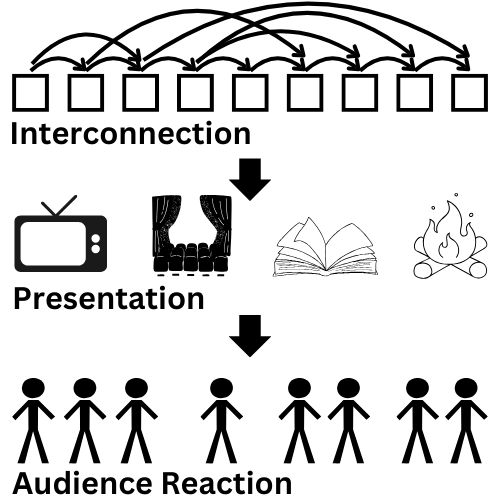
I just created this on Canva. Copyright mua.
What does this mean? This means that the primary concern with a story is its own structure. Is it interconnected? If it doesn’t connect from event to event, moment to moment, and then it broadly doesn’t connect from past moments to future moments, it is broken. The most important feature of a story is that it connects. It is interconnected. This is when dialogue feels clunky, or events are hard to follow: because you can’t find the connections from one moment to the next.
The second concern is presentation. This can be at a meta level. Watching a performance on stage of Romeo and Juliet will always be different then watching that exact same performance, recorded, in your living room. This is “how a story is told.” This can be at a narrower level: within the framework of TV, do I use 8 episodes or 10 episodes this season? The same story, the same interconnected series of events, can come across much differently depending on how you decide to chop up its portions. But this can be at a micro level, too: Do I choose my character to speak at this moment about their want for adventure, or do I choose them to stare off into the distance at a twin sunset while epic music plays in the background? Oftentimes, you’ll hear people say, “That movie was really pretty, but…” or, “It looked good, yet…” or, “The action was fun, but didn’t make much sense.” Those are questions of the interconnectedness (it didn’t make sense, it wasn’t interesting, it was boring) versus the presentation (it was pretty, it looked good, it had good action). That is the presentation of a story, and small changes in presentation can drastically change a story.
Finally, the audience reaction. This has very little effect on whether or not the movie is an interconnected series of events. One reason why it can affect that is if, for example, I assume my audience knows how guns work. However, if I am making a movie about the Roman Empire, I might not assume they know how the pilum, or Roman javelin, functioned. Overall, though, when it comes to actually deciding if a story is good or bad, this has very little effect. It might explain why you like something (I like wizard movies cuz I’ve seen a lot of wizard movies!) but not why something is actually good. It’s why, for example, Harry Potter and the Deathly Hallows, Part 1 has huge flaws: my dad scratches his head when Harry randomly sees an eye in a shard of a mirror, not knowing that it is a plot point removed from the films only to come back when it is important in the second-to-last movie. The movie assumes a knowledge of the book in the audience; but it’s not the book, so the “events” of the grand story of the Harry Potter films are no longer connected. It takes shortcuts while falling apart itself. That is the “audience reaction.” It explains more about you or your culture than whether a movie is actually good.
So, What About The Life List?

So, an “audience reaction” might say, “This movie is cliché.” But that doesn’t tell us at all if the movie functions well. That doesn’t tell us if the movie is interconnected, with previous events always feeding into later events, with dialogue and actions that makes sense of who the characters are and what the characters are doing, thinking, and feeling at the time. All that tells us is, “This series of events is like another series of events I watched one time.”
Now, if what you mean by “cliché,” is, “This movie didn’t provide any justification for the series of events: it relied on my assumptions about these kinds of movies in order to move its series of events forward,” then, yes, that is a proper criticism. This is like when, 2/3 of the way through a Rom Com, there is some sort of misunderstanding that causes the boy and girl to get in a fight and break up – even though what they misunderstood could have been so easily fixed by asking basic human questions, like, “Why are you angry?” That would be a cliché, relying on the knowledge of the audience: “Yup, it’s about time for the fight to happen.”
So, is The Life List a bad movie?
Absolutely not.
Perhaps a brief summary is in order. Alexandra Rose is a woman in her late 20s. She’s “stuck”: working a job at her mother’s cosmetic company that she isn’t passionate about. She quit teaching a few years ago after being unfairly fired. She is dating a video game designer who sees her as object more than person. She is estranged from her father. Her brother, the second oldest, is having his first child with his wife, and all she can do at the baby shower is joke and gag. All of the passion seems gone from her life. Her best friend – who also happens to be her mom – sees it and acknowledges it, but Alex won’t.
When her mom’s cancer comes back and she passes, the passion is sucked out even more. When reading the will, Alex’s mom writes that Alex will not receive her inheritance unless she completes her “Life List” she wrote as a 13 year old by the end of the year. The goal is to regain the passion in her life. After she checks off each box, the executor of the will – a young and also-semi-listless Brad – will give her a DVD recorded by her mom encouraging her to keep going. As she starts checking off parts of the life list, she finds herself freed from anchors in her past, finding meaning in new experiences, as well as new challenges she didn’t even know existed.
First off, is well-connected. Character’s past actions and attributes always inform their current decisions. There isn’t any point where I said to myself, “That really did not make sense.”
There were several points that I thought were purposefully put in by the author or scriptwriter to make sure things “fit together.” For example, how does Alex have the money to go on this yearlong quest to discover herself? Well, her family is fairly well-off (her late mother owned a cosmetic company), she used to work a high position at the cosmetic company while living with her boyfriend, and she is able to live in her family home for several months with no rent, bills, or taxes because the late mother set up a trust to take care of those. Why is it that the “young and handsome Brad” just so happen to be the executor of Alex’s mom’s will? Because the older partner of the firm, Sullivan, didn’t understand the mom’s wishes, so the mom and Sullivan decided Brad would be better at it. Being younger, he’d understand the point better and better be able to help Alex than a 60 year old man. Why does Alex’s boyfriend Garrett blow up at Alex? It’s not due to a blatantly obvious misunderstanding, per se. Garrett sees Alex’s full life list, and “Finding true love” is pointed out to him by one of Alex’s friends. After both being confronted over his lack of investment in Alex’s life and keeping her at a distance, and then an evening of feeling entirely out of place in her apartment and with her friends and family (which is presented brilliantly, as we’ll soon see), he says that maybe this just won’t work. It’s not a “misunderstanding” – although he wonders out loud if she’s just dating him to check off a box. It’s mainly, “We don’t work together.” They provide more interconnection than simply, “We had a fight,” It’s a fight about something, something that has been building since the beginning of their relationship.
Arcs and Realism
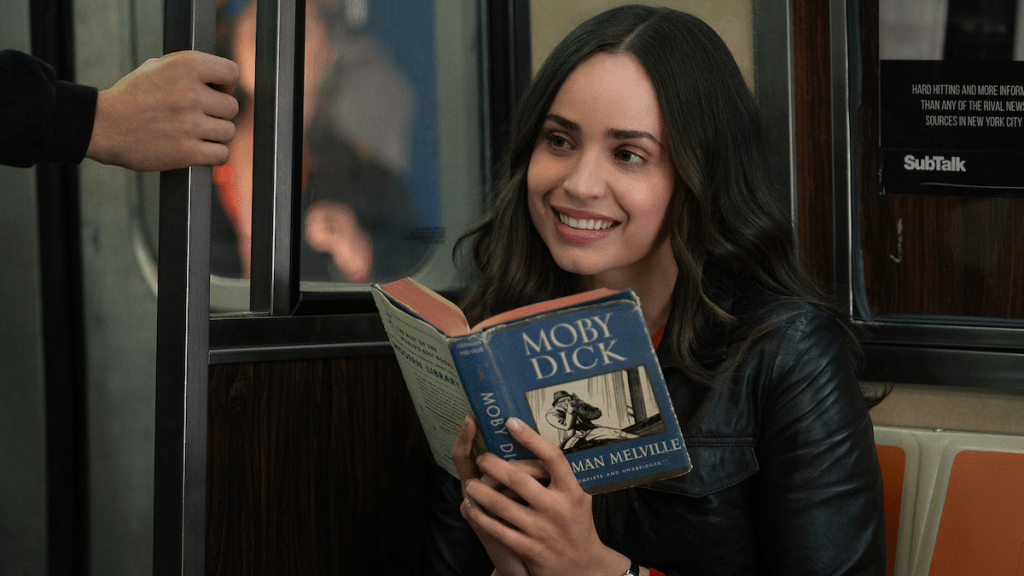
In addition, this movie actually gives characters arcs. Complexities. Nuances. Alex is the chief beneficiary of this. The movie doesn’t let her escape her flaws; she can be selfish, self-centered, and closed off from other points of view, while lacking empathy. Other characters acknowledge this, especially her two older brothers in several heart-twisting scenes. Her mother, who seems like the “perfect mom,” has her own flaws revealed over the course of the film. The oldest brother, who originally seemed like kind of an arrogant jerk, has his layers revealed over the course of the movie. In a way, you realize it’s Alex’s impression of him that has distorted him for you, the viewer. Not that Alex is an unreliable narrator, but that because of her “funk” she doesn’t see another side of him. She also (spoiler) cheats on Garrett with Brad while drunk and really sad about the discovery of her birth father, thinking Brad is still dating his girlfriend too, although they had broken up (end spoiler). This also demonstrates that she is far from perfect. The event also has consequences, as it severs a friendship and a relationship. Alex isn’t perfect, and the writers know it and play into it. You see the huge contrast between Alex avoiding and insulting all the pregnant women in the baby shower in the beginning of the movie, and how she interacts with them at the end of the movie at the final New Year’s Eve party. She’s grown up. She’s matured. She isn’t so selfish anymore by the end.
The same is true of Alex’s dad as her brother; their tumultuous relationship is one of the high points of the movie. You get why he does what he does by the end, and seeing their reconciliation is heartwarming. You also see how Alex has distorted their relationship even from childhood in small ways, and their reconciliation is another high point of this already good movie. In between there, there’s a realistic but hard-hitting scene where Alex spots her dad on the other side of the street after they had a big fight and revelations came out about the family. He waves at her. He says he’s leaving in a second for his Uber. She says that she just needs more time before they talk again. He looks down at the ground, looks around, looks at her for only a moment and says, “I know.” Then he gets in the car. Something about the way he can’t look her in the eye, only to for a brief moment, felt very representative of awkward family interactions.
That isn’t the only scene that feels “realistic,” even in a movie that is larger-than-life. One that really stands out to me is a teenager in the temporary housing facility that Alex teaches at. He doesn’t want to pay attention in class. Instead, he is sketching. Alex takes the sketchbook after he insults Hamlet and her. She takes the sketchbook. He steals it back after yelling and flips her off. When Garrett tells her to take a gentler, more “take-your-time” approach, she doesn’t listen and gives the boy some books on artists and a 90 minutes movie version of Hamlet from the library. After class, he walks outside in the rain, following her, and drops the books in the rain-soaked street. At the end of the school year, though, a few months later, as class is leaving, he turns toward her as he leaves. “I watched it, Mrs. Rose,” he says. “The movie.” Then he turns in a sketch of Hamlet with the words of “To-Be-Or-Not-To-Be” making up his face. He then leaves with little emotion.
It feels realistic because there is no tearful make-up. There is no acknowledgement that he did anything wrong. There is no “Mrs. Rose, you’re the best for sticking it with me!” It’s just, “I watched it.” As someone who has interacted with many teenagers, it captures the “sorry, but won’t acknowledge it” moment that often happens. It’s also cool because that’s the moment Alex checks off, “Be an Amazing Teacher,” from her life list, and it feels earned while also being subtle. You understand why she feels that way, but also are glad that it wasn’t some crazy huge moment that made her check it off. It didn’t feel manufactured. Perhaps that is an “audience reaction,” but it grounds the interconnection of the events of the story in reality in a way that I haven’t seen in my movies recently.
Another also involves the oldest brother who’s kind of a jerk. After (spoiler) Alex finds out she is the product of an affair, she tells her brothers. Her older brother’s main voiced concern is that this doesn’t get out and ruin the company (end spoiler). Offended by her brother’s words, she insults him and storms out of the room. Her sister-in-law comes to her and says that while she gets what Alex is going through, her brother is going through a hard time and we all need to be sensitive. Offended at her brother’s perfect, all-together life, Alex asks what could he possibly be going through? The kids didn’t get perfect A’s, a student at law school forgot to turn in a paper, his wife isn’t the head of the company anymore? The sister-in-law looks shocked, and says, “The death of his mom.” Alex’s jaw drops, and starts tearing up. She hugs her sister-in-law, who hugs her back while shushing her, too.
This is “realistic” for several reasons, too. Grief and anger blind people to the feelings of others. It also can feel so lonely and personal, and you forget that others are experiencing it with you or alongside you. In addition, Alex is a pretty self-centered person to begin the story, becoming more and more selfless as the movie goes on. Having this scene is a real turning point for her where she opens up to her brothers and their feelings, too. Alex goes on a great arc, and every scene reinforces this in impactful and meaningful ways.
There’s one more, and it’s the scene that I think is worth the price of admission alone. I’ve already mentioned it before: the scene when Garrett hangs out with Alex’s friends and family for the first time at her place for the first time. The way it is filmed so well-captures the feeling of loneliness and rudeness that can come from entering a group of friends you are not a part of. People are talking across each other, shouting out things. At one point, looking at Garrett from over the shoulder of others at the table, Garrett starts to speak. He’s not the center of the frame, but off to the side. Immediately, someone cuts him off and says, “Oh, that reminds me…” It doesn’t zoom in on Garrett, or focus on his face. It slowly pulls out from the table as you see Garrett’s mouth hang open, then shut, and then he slowly slumps at the table. This isn’t the polite academic conversation he’s used to. Shortly after, there’s a short which starts at Garrett, looking miserable. The camera is at the center of the table, and spins to look at each person in turn, all insulting each other and talking over each other and joking with each other. It’s wild and crazy but feels exactly like an old group of friends. Then it spins all the way back around to Garrett again, who looks more miserable and confused than before. He looks left and right at everyone in bewilderment.
This isn’t an “interconnection” moment. This is a “presentation” moment. They didn’t have to film it this way. But doing it this way really captured this feeling, one that I’ve had several times before on both ends of the situation: when I felt alone, and when I realized that someone else I had brought felt alone and left out of the group. It was a great move and one that was really well-done. This demonstrates that when your “interconnection” is solid, the way you “tell” the story can lift it up even higher.
No Clichés

I don’t think this movie has clichés. In fact, I think it demonstrates an ability to write a story that holds together well and keeps an eye on realistic character interaction and arcs, while also presenting it in a unique way.
In other words, make a judgment yourself. Don’t listen to the critics. Watch a movie and judge for yourself if it is interconnected, or if it severs connections. Then keep track of its presentation. Then, and only then, do you turn to the audience – Reddit users or critics alike – and see what others thought. And if they cite their personal likes or dislikes, or clichés, remember: “That answers nothing.” The only thing you can judge is the quality of the film itself.

𝙷𝚒! 𝙼𝚢 𝚗𝚊𝚖𝚎 𝚒𝚜 𝙽𝚊𝚝𝚑𝚊𝚗. 𝙸 𝚕𝚘𝚟𝚎 𝚜𝚝𝚘𝚛𝚢𝚝𝚎𝚕𝚕𝚒𝚗𝚐, 𝚕𝚎𝚊𝚛𝚗𝚒𝚗𝚐, 𝚊𝚗𝚍 𝚌𝚛𝚎𝚊𝚝𝚒𝚗𝚐, 𝚊𝚗𝚍 𝚊𝚕𝚜𝚘 𝚕𝚘𝚟𝚎 𝚝𝚘 𝚝𝚊𝚕𝚔 𝚊𝚋𝚘𝚞𝚝 𝚝𝚑𝚎𝚖 (𝚜𝚘𝚖𝚎 𝚠𝚘𝚞𝚕𝚍 𝚜𝚊𝚢 𝚝𝚘𝚘 𝚖𝚞𝚌𝚑!) 𝙵𝚘𝚕𝚕𝚘𝚠 𝚝𝚑𝚒𝚜 𝚋𝚕𝚘𝚐 𝚝𝚘 𝚜𝚎𝚎 𝚖𝚘𝚛𝚎 𝚌𝚘𝚗𝚝𝚎𝚗𝚝!
 Go-To Guru: Film, Literature, Television, and More
Leave a comment