
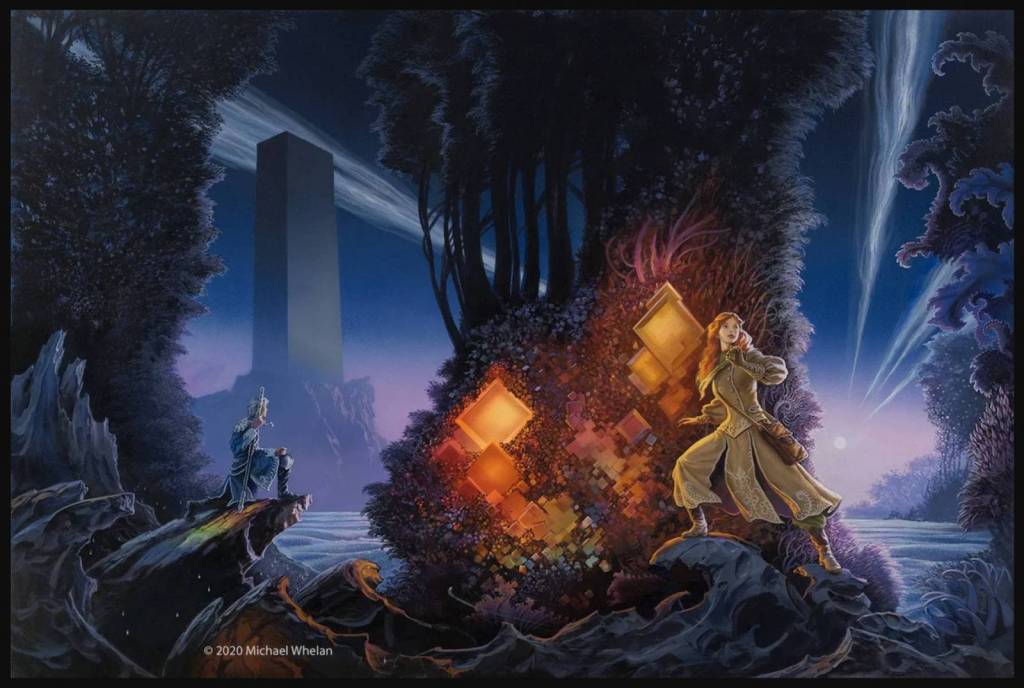
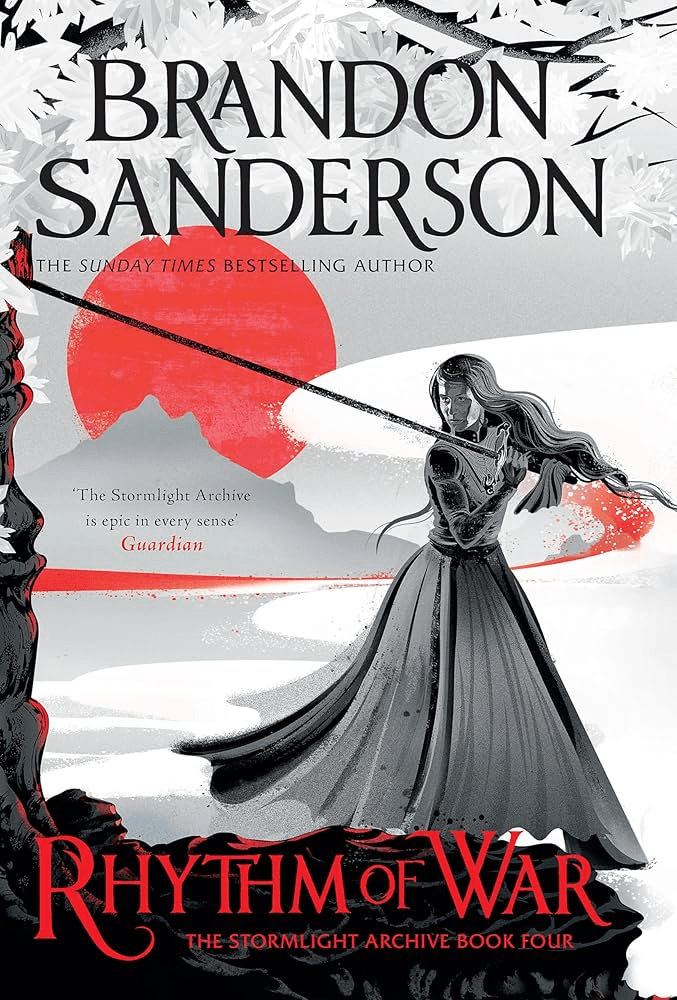
Rhythm of War is the fourth book in The Stormlight Archive, a still-being-written high fantasy series by acclaimed author Brandon Sanderson. It was published in 2020.
That was much faster than last time.
I started The Stormlight Archive in January of 2024. Within three months, I finished Way of Kings. You can read my review of it here. Then, within a few more months, I finished Words of Radiance. You can read that review here. I wrote in my Oathbringer review that it took me almost a year and a half to read that book, and a month to write the review. Now, only a month later, I’m writing the review of Book 4, Rhythm of War (hey that rhymed!) That was much faster than last time.
But enough about me. Does Rhythm of War live up to the lofty expectations set by Oathbringer and the other books?

The Story Before the Story
In the past, I’ve summarized the world of Roshar as well as the story of Roshar so far. For reasons I’ll get into, I no longer think the world is as important as the story of the world. Let’s summarize, shall we?
Tens of thousands of years ago, somehow, someway, the creator-god of the Cosmere named Adonalsium was killed or destroyed. His essence was split into sixteen Shards, which were dispersed across the Cosmere. The Shards were each of a portion of Creation – shards like Passion, Honor, Cultivation, and more. Possessing a Shard gave the owner godlike powers, including the ability to see futures.
Traveling between planets is possible by traveling first from the Physical Realm into the Cognitive Realm, a Platonic-like plane of existence where objects are represented by billions of marbles in a giant sea of ideas, while ideas, emotions, and experiences are represented by creatures called spren. Some are more akin to animals, like painspren, gloryspren, or cultivationspren. Some are more like people, such as honorspren, cryptics, or lightspren. There is also a Spiritual Realm, where the souls of those who die go to, as well as where the power of the Shards come from.
The planet Roshar is unique in that it had two Shards, the Shard of Cultivation and the Shard of Honor, possessed by Koravellium and Tanavast, respectively. This has granted the presence of so many Spren on Roshar. The natural denizens of Roshar are mostly animals and creatures with shells and carapace with gemhearts inside, an actual gem used to contain spren and so grant both sentient and animal-like creatures of Roshar unique attributes. For example, Luckspren somehow live within Greathsells, massive sea creatures larger than boats, to give them their ability to be so big and not collapse under gravity. The natural sentient denizens of Roshar, the Singers, are humanoid but have a carapace with various designs on it. They can bond with Spren to change their forms into various forms like mateform, workform, nimbleform, or meditationform, granting them different abilities and capabilities in each form. The Singers are called Singers because they can hear the “rhythms of Roshar” – somehow, the Shards create music and rhythm that can be felt and heard by them, which they use to communicate with each other. Roshar is also unique in that a giant Spren – the Stormfather, connected to Honor – creates a storm that rakes across the continent every few weeks. This storm can throw boulders and destroy houses. All life on Roshar has adapted to this gigantic storm.
Ten thousand years ago, humans entered Roshar, bringing with them their god, Odium, the Shard of Passion, possessed by Rayse. They had destroyed their own world, Ashyn, through the powers that Odium’s own Spren granted. Fleeing to Roshar, they started a cosmic war between Odium on the one side, and Honor and Cutivation on the other side. At some unknown point, the humans chose to switch sides and were granted bonds with Honor and Cultivation’s Spren, but unlike changing forms like the Singers, it granted them extraordinary powers. The Knights Radiant were formed, ten orders of Radiant for ten kinds of bonds with Spren, each with unique powers. At their head – separate, but linked – were the Ten Heralds, ten immortal humans who used special swords, Honorblades, to grant them their Knights Radiant-like powers. Odium, meanwhile, captured the Singers, cursing them and influencing them to become his personal warriors. At their heads were the Fused, nine orders created in parallel to the Knights Radiant, immortal warriors who when killed would return to Braize to be released again after possessing a new Singer body on Roshar. After every Desolation, or Battle, the Ten Heralds would return to Braize as well; as long as they were all sane and fighting, peace would reign on Roshar, but if they were tortured they could be forced to return to Roshar from Braize and thus free all of the Fused and Odium himself. Every return, though, made both the Heralds and the Fused more and more insane. This agreement was called the Oathpact.
Thousands of years ago, the Heralds abandoned their oaths, forcing one of the Ten, Taln, to remain in Braize for four and a half thousand years. Soon after, the Spren abandoned the Knights Radiant and the Knights abandoned their oaths. Soon after that, Odium somehow figured out how to kill Honor, leaving Roshar with the power of Honor but none of his influence or guidance. Humans were left for four and a half thousand years to slowly advance, creating more and more technology by using Spren, while the Singers were either stuck as mindless servants called Parshmen or Parshwomen or as hidden native-like people called Listeners who lived a solitary life, with only songs and legends of Humans with them. Human cultures developed religion that worshipped the Ten Heralds, kept some of the knowledge of the past, like mythical monsters called the Voidbringers based on the Fused and Singers. In some cultures, those with light eyes (blue, green, or gold) were considered “upper class,” while those with “dark eyes” were lower class, a corrupted version of how Knights Radiant’s eyes glowed when with their Spren. Those cultures also assigned masculine and feminine arts, with masculine arts – like warfare – using two hands, while feminine arts – like writing, reading, math, and painting – requiring one hand, thus making all women in these cultures have a “safe hand” permanently covered by a glove. Revealing it is considered scandalous and sexy. Some curse the Stormfather and the great Storm, or some revere and worship it. Everyone has to react to the great Storm, with Stormward and Leeward sides to every building. Some cultures worship the Spren, like the painspren that come wiggling out of the ground as orange hands when you are in pain, or the creationspren that fly over your head to peak at you while you create. Others fear them. But for four and a half thousand years, humans have grown on Roshar.
Now, though, the war has restarted. The restarting of this war, the return of the Fused and new Knights Radiant, and the conflict between Odium and the other Shards is the heart of The Stormlight Archive.
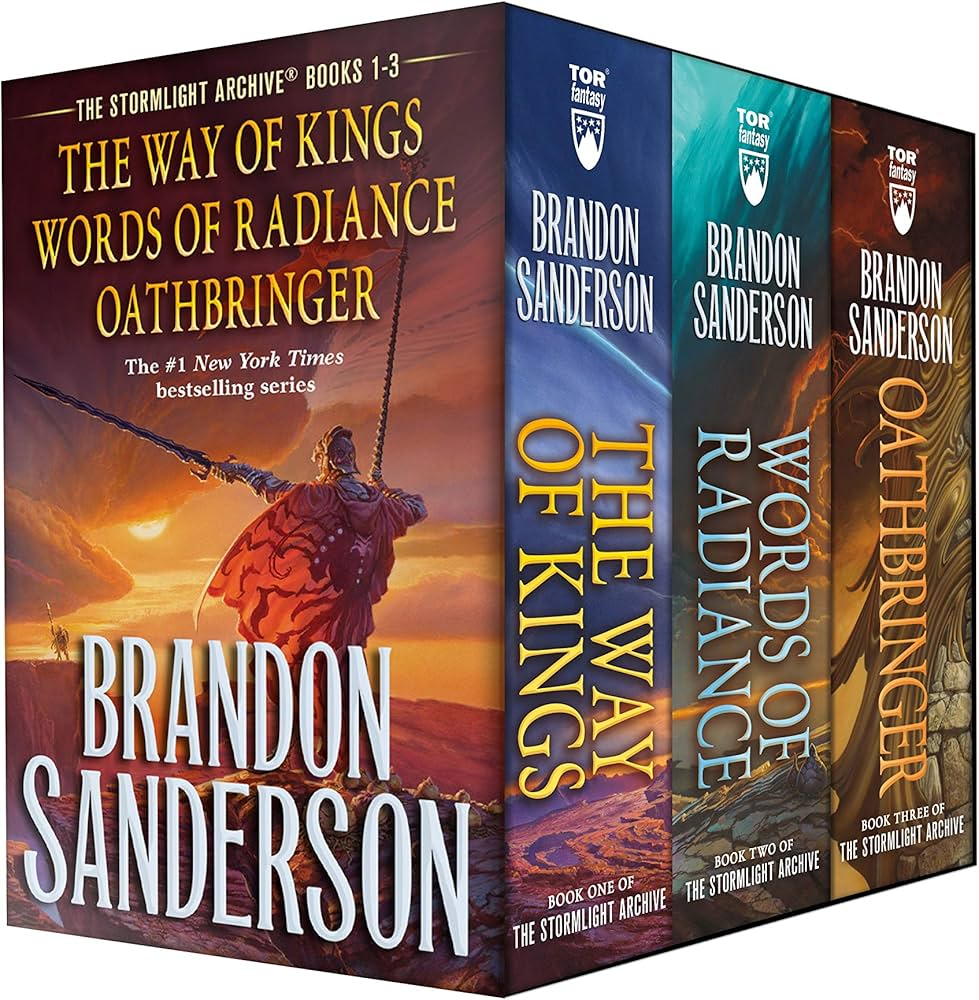
The Books So Far
How did this war restart? When King Gavilar, uniter of Alethkar, discovers the Listeners, that tribe of “intelligent Parshmen/women,” all things fall apart. King Gavilar realizes these are “Voidbringers,” and he thinks that if he brings back their ancient Fused and forms of power, he will bring back the Heralds as well. The Listeners are told this and do not want their “old gods” to return, and so kill Gavilar using an Assassin In White that has been shown to them.
In the first book, Way of Kings, this war has ground to a bloody standstill, neither side gaining any ground. When slave Kaladin, forced after running away to be on the front line “bridge crews” who cross the gaps in the shattered plains, begins to discover Knight Radiant powers, he uses them first to save his slave friends and then to save Dalinar, Gavilar’s brother and uncle to the current King, weak and ineffectual Elhokar, and Adolin, Dalinar’s son. Dalinar was setting out to unite the kingdom beyond merely petty battles for glory, but was betrayed. He also is receiving visions during Highstorms, which he realizes are warning him about the Voidbringers coming again. Meanwhile, Shallan, sent by her brothers to attempt to steal from Elhokar’s sister Princess Jasnah in the city of Kharbranth, finds out that both she and Jasnah are Knights Radiant as well. Shallan has the ability to create illusions and alter the properties of objects, while Jasnah has the ability to alter objects and to teleport between the Physical and Material realms. Meanwhile, Szeth, the Assassin in White who killed Gavilar, is ashamed of all the war he has brought the world but is used by a puppet master to kill world leaders across the continent. And Taravangian, the king of Kharbranth, is revealed to be behind the plot the whole time, orchestrating a plan to stop the Voidbringers from returning with their God, Odium, the owner of the Shard of Passion.
In book two, Words of Radiance, Shallan and Jasnah travel to the Shattered Plains to tell the leaders there they have discovered that Listeners are the Voidbringers and that an ancient city might be in the Shattered Plains. Jasnah is betrayed and killed, so Shallan must go herself. She arrives, is engaged to Adolin and starts unraveling the plots of a group called the Ghostbloods, the group that tried to kill Jasnah and trying to uncover the people who knew Gavilar’s original plans. At the same time, Dalinar and Adolin still seek to unite the kingdom of Alethkar, as Dalinar’s visions tell him to, and he reveals his visions to an inner circle. From his visions Navani, father of Elhokar and Jasnah, is able to uncover ancient secrets long thought forgotten. Meanwhile, among the Listeners, Eshonai seeks to bring peace while Venli seeks to bring back Stormform, a form of Odium’s. When she succeeds, the Listeners then enact a plot to bring in the Everstorm, Odium’s storm to rival the Stormfather. During all of this, Kaladin has become Dalinar’s new bodyguard, along with his bridge crews, but he hasn’t revealed his powers to anyone but his men. They begin training him as he trains them, grasping the full extent of his powers and his bond with his Spren, Sylphrena, an Honorspren. However, when his friend Moash is revealed to be a in a plot to kill King Elhokar, Kaladin struggles with honor to the point that he almost kills Syl. Instead, he says new Words and gains more powers. It all comes to a head when Dalinar goes with some of the Highprinces to the center of the Shattered Plains, as the Listeners summon the Everstorm, Kaladin saves Elhokar, and then Szeth comes to kill Dalinar, sent by Taravangian and his secret organization, only to be stopped by Kaladin with his new powers. The armies of Alethkar discover the city and something called an “Oathgate,” and during the battle they use it to teleport to Urithuru, the ancient city of the Knights Radiant. Unite them, Dalinar’s visions say. That’s exactly what he’ll do: unite the world, bringing back the Knights Radiant. He bonds the Stormfather spren, becoming something unique: a Bondsmith.
In book three, Oathbringer, the new Knights Radiant struggle with their newfound powers as it feels like Urithuru is against them. First, Shallan uncovers a nightmarish spren, a spren of Odium called an Unmade, who is haunting the tower at the request of the Ghostbloods. Then, Kaladin, Shallan, Adolin, and Elhokar go to help the capital of Alethkar, Kholinar, as it prepares for a siege. Kaladin and Shallan’s spren – Syl and Pattern – come too. In the Everstorm, all of the unintelligent Parshmen/women became Singers, and have now formed a giant army with the Fused at their head, preparing to retake Kholinar. Once there, they find Kholinar much worse than they thought: three of the nine Unmade have taken over the city, including Elhokar’s wife, and in the ensuing battle Elhokar is killed by Moash, who has joined the Singer armies in anger. At the same time, Dalinar slowly navigates the politics of the world to unite all of the major kingdoms into a coalition against Odium, most significantly the skeptical trading metropolis, Thaylen City, but also the manipulations of Taravangian. He does this with Navani and his niece Jasnah’s help, returned from the attempted killing. He also slowly uncovers memories of his past, most significantly that he killed his first wife Evi when she went to negotiate with a city he was sieging while uniting Alethkar under Gavilar. Now married to Navani, his first love, he struggles with guilt, especially when he learns that Adolin and Elhokar are dead. But really, Adolin, Shallan, and Kaladin are not dead; they have traveled to the Cognitive Realm, Shadesmar, through the Oathgate in Kolinar. They travel the strange other dimension of Shadesmar while Dalinar prepares to defend Thaylen City from seige and a betrayal from Taravangian is revealed. Odium and his forces arrive and seem like they’re going to take the city when Dalinar walks out to Odium and offers a contest of champions to decide the fate of the world. Odium accepts, but says his champion will be Dalinar, pouring his influence into him, telling him to give up his guilt for Evi and his entire life. Instead, Dalinar tells Odium, “YOU CANNOT HAVE MY PAIN!” and, using his Bondsmith powers, creates a bridge between Shadesmar and the Physical Realm. With Adolin, Shallan, and Kaladin in the city, along with the powers of Jasnah and a returned from the dead Szeth pledging to serve Dalinar, they successfully defend the city and Odium retreats for now. However, they all recognize the war has just begun. In happiness, Shallan and Adolin finally marry, starting a new chapter in all their lives.
That’s the three books so far, condensed extravagantly (sorry for those who wished for more detail. These are criminally short summaries… but we’re focusing on the main plot for now). Now that we’ve come to Rhythm of War, how does this book stack up compared to the other three so far?
The Good
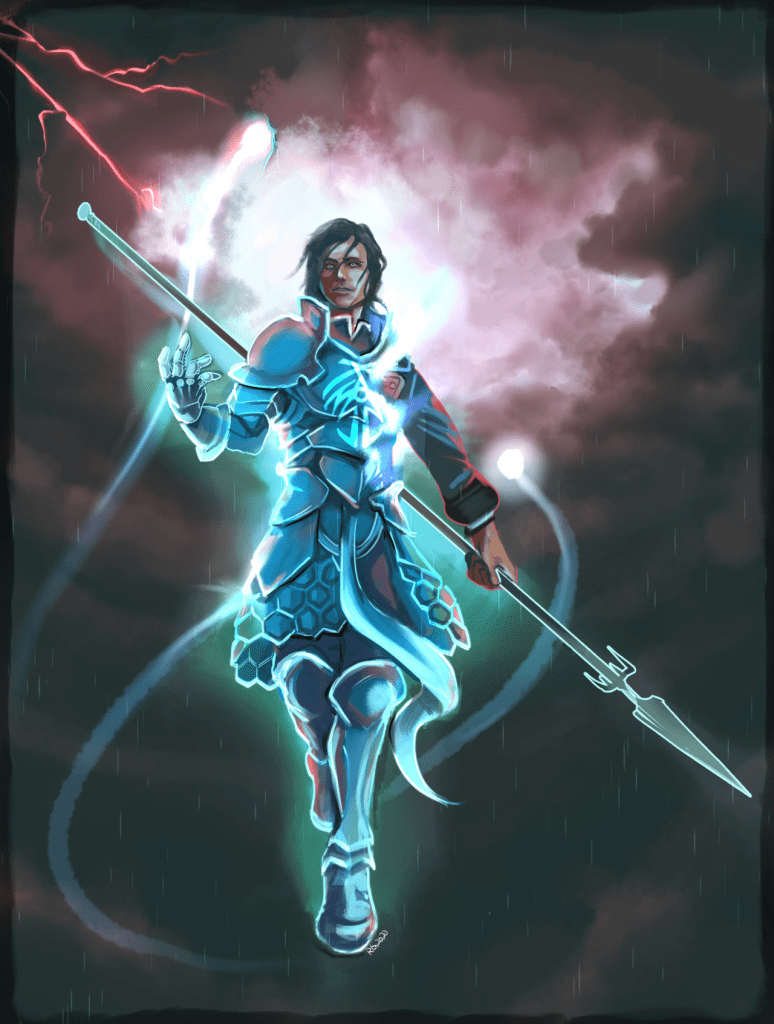
There is a lot of good in this book, as there always has been for Sanderson. Here’s a few that stand out to me. But first, a short summary. Spoilers of the entire book to follow.
It’s been a year since Oathbringer, and the war continues to grind on. We start with an operation to rescue the city of Hearthstone using Navani’s new experimental floating platform, including Kaladin’s father, as well as a Herdazian military genius called the Mink. After the operation, we see the new world being built in Urithuru. As war wages around, Kaladin, Adolin, Shallan, and the rest of Bridge Four have built a friendship and a family. However, after Kaladin freezes up in battle when seeing Moash, Dalinar asks him to step down from military service. Kaladin must find out what to do next in his life. Meanwhile, Adolin and Shallan travel to Shadesmar because Honorspren have stopped coming to bond new Windrunner Knights Radiant. They set out to convince them to give humans a try again. At the same time, we get to see the point of view of Venli, the last surviving Listener who now works under two powerful immortal Fused, Lewshi and Raboniel. However, at the end of Oathbringer, she also bonded a Spren and became a Knight Radiant, the first Singer/Listener Knight Radiant in thousands years. While Dalinar, Jasnah, the Mink, and others head to Emul to fight decisive battles against the Singers and Fused, Navani holds down the tower of Urithuru, working on her experiments and a mysterious voice sending her letters. However, war in Emul is a feint, and the Singers and Fused capture Urithuru, shutting off most Radiant’s powers. Now, it’s Die Hard with magic, and Kaladin must fight the occupation while Navani tries to work with Venli and Raboniel while undermining them at the same time. The voice was the spren of the tower, the Sibling, and now Raboniel is trying to kill it. After many ups and downs, Urithuru is freed, Venli reveals herself which makes Lewshi betray Odium, Shallan and Adolin manage to convince some of the Honorspren through the testimony of his “Deadeye” Spren Maya, and Dalinar finds out that many of the Heralds are far crazier than they thought.
Spoilers for the rest of the book to follow as we discuss some highlights.
Raboniel, Lady of Wishes was a highlight of the book for me, as was the window into Singer and Fused culture. Raboniel is a Fused who is a master of science. She’s almost a “mad scientist” so to speak. In the previous Desolation, she tried to invent a disease to wipe out humanity and she didn’t care if it killed Singers as well. Thankfully it did not work, but she is known for being cold, ferocious, and calculating. However, through both the singer Venli and the captured Navani, we see a completely different side of her. She is fascinated by the science of Voidlight, Stormlight, Lifelight, and how they mix. At first, Raboniel says she wants to get anti-Voidlight to kill Odium, to end the war once and for all. But it is revealed she wants anti-Voidlight to kill Spren, and that the Fused are almost half-Spren, half-physical beings. Raboniel has a daughter Fused who is insane because she has traveled back and forth to Braize too many times. So, once anti-Voidlight is invented, she uses it to kill her daughter. Then, she gives the dagger to Moash, to kill Kaladin once and for all. The twists and turns of Raboniel are really interesting. She’s the first Fused that we’re really gotten to see up close and personal from multiple perspectives, and the insights she offers on Singer culture and Fused culture and serving Odium are really cool. She puts flesh and bones on the evil of the Fused, and you understand why they are the way they are. She’s a really great “understandable Villain,” always one step ahead of the heroes until she isn’t and Navani outthwarts her. But even to the end, Raboniel has respect for Navani and helps her defeat Moash. She was the best part of the book for me and a really well-written character.
Venli is another highlight of the book. Looking around online, I’ve seen quite a few criticisms of her and Eshonai’s shared flashbacks, as well as the lack of agency Venli has. Most of the story is Venli struggling with revealing she’s a Knight Radiant, and her and her Spren, Timbre, working through her past. However, I liked Venli and think that critics don’t give her writing enough credit. Yes, she is not as active as other main characters have been, but she’s no more or less active than Kaladin was in the first book, trapped in a cyclical situation trying to find solutions. Venli is in a similar situation, trapped, except she does more. She organizes a group of Singers who plan on betraying and leaving the war behind. She uses them to care for the unconscious Knights Radiant in Urithuru, befriending humans as she does so. She attempts to manipulate Raboniel and Lewshi, and even does it successfully once when she rescues Lift from Raboniel. She is more active than people give her credit for. So, too, her flashbacks are good because it isn’t Trauma that is her flaw – although in the present she has the trauma of letting her entire people die in her schemes. Her flaw is her ambition, her jealousness, her desire to be recognized. That is what dooms her. And that is the exact flaw that she overcomes by working with humans and seeking not to be recognized for being a Knight Radiant until just the right time. While the flashbacks cover some ground that we have covered before, I think they provide a really great window into Singer/Listener culture, as well as more details in how Gavilar really did manipulate the Listeners through Axidweith. Yes, there is some repetition, but on the merits I don’t think it’s any more or less repetitious than Way of Kings was. Perhaps that’s the frustration – that things should be moving faster by book four of the series – but I think Venli and her flashbacks are important as a window into Singer/Listener culture, and as a character who struggles not just with trauma, but personal flaws.
While some I’ve found don’t enjoy Navani’s repetitiveness (I’m not a scholar, she said for the 54th time) and the focus on the science of magic, I enjoyed her arc in this book. I always wanted more focus on Navani because I found her similar to Dalinar – she actually had flaws to overcome. She did help Gavilar take over Alethkar, she was a conquering and conspiring opportunist, and that past was never really addressed. I wanted her to get the same treatment as Dalinar. While I don’t think she totally got that treatment – I think there needs to be more to justify the change from conniving to idealist we see now – it is great to see where she is now. I found the science of the magic works well in the story – whether a reader likes it or not – because it answers many questions that have come previously about rhythms, resonance, the resonant shapes of the ancient cities which have been set up since Way of Kings, and more. I also like the idea of the scientist: someone intelligent discovering more about this world. It fits well with Sanderson’s story, because his worldbuilding is so thick. Uncovering the mysteries of the worlds he builds has always been his strong suit, and has been since Way of Kings, and Navani is a great vehicle for that discovery. Her back-and-forth with Raboniel is also fascinating, both as they become “friends” and as they both manipulate each other. It’s a casualty that they are both on different sides of the war – but they never would have met if they weren’t.
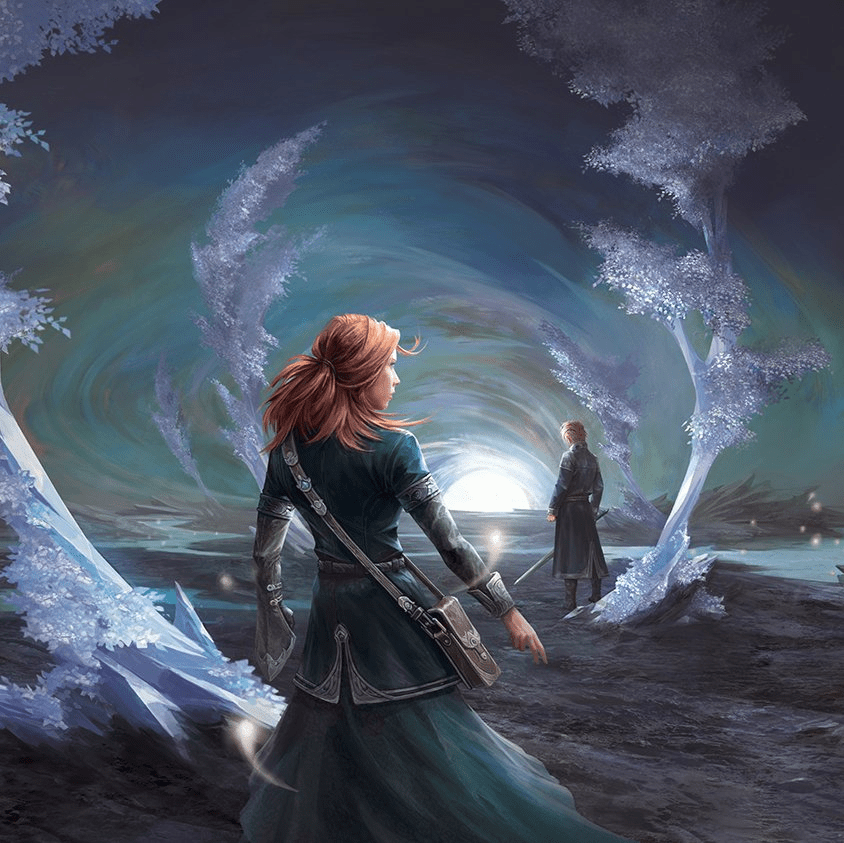
I personally find the trial of Adolin really interesting and wish more time was spent on it and Spren culture. While we have a window into the alien world of the Singers through Venli and Raboniel, we get tantalizingly close to the same thing with the Honorspren but never quite reach it, in my opinion. However, the trek through Shadesmar and then the trial in Lasting Integrity are still highlights. Adolin really shines in this section as an earnest hero, not the smartest in some ways but certainly not stupid and loyal to a fault. It was cool to see the Honorspren Notum return, and the consequences of his actions in Oathbringer leading to his exile. His role in the trial was also fun, getting close but not quite answering the question of, what happens when honorspren change? I wish this was explored more. When Kaladin changes to be dishonorable in Words of Radiance, he almost kills Syl until he swears the Third Ideal. However, if Honorspren are changing to be dishonorable, does that kill them? The idea is kind of explored, but I wish it was explored more.The climax, with the reveal that Maya and the rest of the deadeyes agreed to abandon their oaths, not knowing what would happen but knowing it wouldn’t be good, is a profound message about sacrifice.
Kaladin’s Fourth Ideal (not to save everyone; but to save one) is another highlight. After he was unable to swear the Fourth Ideal in Oathbringer, we all knew it was going to come sometime in Rhythm of War, most likely. In both Way of Kings and Words of Radiance, Kaladin swearing the second and third ideals were climax moments. A whole group of people needed help, and in order to save the day for everyone, Kaladin had to swear at just the right moment for him to get his power boost that he needed. I thought they were both a little Deus Ex Machina-y, giving him the exact powers he needed when he needed them. However, what I like about Kaladin swearing the Fourth Ideal is that it happens for him to save one person: his father. While yes, it goes on to help save the day, it’s not the main reason by any means. It’s mainly to save his father tumbling off the side of Urithuru. That personal victory is also really profound and it’s great to see father and son reconcile, at least a bit.
Taravangian has always gone back and forth as my favorite character, next to Dalinar. He has some really fun opportunities in this book to showcase both his intelligence and his emotion. His conversation with Odium, where he sees Odium’s flaw, then his conversation with Dalinar where they discuss what will happen after this war, and then his final conversation with Odium are all highlights of the book. It honestly shook me after the first conversation, when Taravangian reveals his new secret: He has not given up. Those words are amazing, coming from the character who had given up, was fine with the minimum from Odium because he thought humans could never win. But now he has not given up. That’s echoed into Dalinar’s conversation with him when Dalinar says he hopes after the war, Taravangian and him will sit next to each other, and be able to say that Taravangian was wrong. And Taravangian says he hopes it is true. From someone who has done so much and been so pessimistic, this is heartbreaking and comforting. But then, when Odium appears to Taravangian the final time, Taravangian then kills Odium – or at least his vessel, Rayse – and Taravangian becomes the Shard of Passion. He will save them all. That is terrifying and electrifying, and completely unexpected for me. Well, I read a spoiler that it would happen, but I didn’t know how it would happen, and Taravangian now being the “main villain” of the series will be very interesting going forward. The control Brandon Sanderson has over his stories, mixed with unexpected jumps in chaos where the rules he’s set up play out in crazy ways, is really cool to read.
That’s the end of my highlights. Now, onto some things that I don’t think are all bad, necessarily? I think they’re just… Weird.
The Weird
In the past, I critiqued Way of Kings for being too repetitive and repeating the same story beats in the same locations over and over and over again. I critiqued Words of Radiance for its coincidences and for its power creep. I critiqued Oathbringer, as well as the previous books, for not having a distinction between trauma and flaws (which, I think, flaws are better to have), for having Deus Ex Machina moments that save everyone at the last moment, and for a world that was constantly changing. What’s there to call weird in Rhythm of War?
Right from the get-go, the year time skip feels kind of… off. There’s a year between Oathbringer and Rhythm of War, and a lot happens in that time, it seems. I read Dawnshard, the novella that takes place in between Oathbringer and Rhythm of War, and that still left a lot of questions. Kaladin goes on some dates, Navani invents a flying platform, there’s a whole war in Herdaz, there’s war across Roshar, we have hundreds more Knights Radiant especially Windrunners, Kaladin and Adolin and Shallan become really good friends, Shallan officially splits into her three personalities rather than just using them, and we only see the end result of all of these. Then, as we’ll get to later, it’s then said that “We’re losing the war!” when it really doesn’t seem like they are? The year timeskip is kind of weird, and raises more questions than it answers. It’s weird to jump when Oathbringer seemed to have been setting up a full war. Perhaps it’s because of how detailed and complex Sanderson’s writing is, since we spent several chapters just on this evacuation of Hearthstone and you get a glimpse into the operational scale of a battle in the war. However, if you were expecting more battle, more strategy, most of that is skipped over.
Some have critiqued this book for taking away so many powers at Urithuru when it’s getting late in the series and we should be seeing more powers, not less. While I enjoyed “Fantasy Die Hard,” it is another case of characters running into the same problems over and over and over again and trying to find permanent solutions. Again, it’s weird because it seems to slow the momentum, when after Oathbringer the expectation is the momentum to build, for there to be lots of battles and strategic manuevering. Instead, it’s “Die Hard” – good die hard, fun die hard, but still stripped-back Die Hard rather than full fantasy fisticuffs that Oathbringer seems to set up with the final battle at Thaylen City.
Now, I complimented the science of magic scenes above. I think as a mechanic they operate well within the story and that science is important. However, I do think the scenes themselves, as Navani pursues her discoveries, can be difficult to follow. I don’t know if it’s the way they’re written, the way the information is delivered, or how many slow steps Navani takes, but I’m not a person to reread sections and I had to reread several to figure out what was going on. Again, I think the concept of the “Science of Magic” and their role within the greater story of Stormlight Archive works well, but I think that the writing on the individual scenes does not work as well, especially compared to how smooth the rest of the book reads.
I mentioned how much I liked the trial of Adolin. What kind of bugged me is how unimportant the trial seems to the rest of the story. We have Adolin and Shallan’s point of view for Part 2, we skip them for all of Part 3, the trial is in Part 4 (away from the climaxes of the rest of the book), and then we come back to them at the very end of Part 5. The trial, by comparison, feels like a minor plotline in the rest of the book, when it seems to me to be one of the most important. I was also really disappointed because Adolin has not yet felt any consequences for his choice in killing Sadeas, and I really, really thought this was when it was going to happen (“How can you claim to be honorable when you’ve killed a man in cold blood?”) to make it all fall apart. Instead, Adolin still hasn’t faced any consequences for that decision and the trial feels relatively unimportant in the grander story based on his it’s structured and how it takes up space within the story.
For those who love Dalinar, Dalinar spins wheels for more of the book. He doesn’t discover a lot, he doesn’t progress a lot, he doesn’t do a lot, it’s mostly him realizing he needs to be different if he is to win this war. The war in Emul and the battles there are mostly glossed over save two, and much of it happens outside of Dalinar’s control. He spends a lot of time worrying about Urithuru but not doing anything about it. He goes to see Ishtar to unlock more of his powers, but then doesn’t learn much and sets up a plotline for the next book (Kaladin and Szeth in Shinovar). I don’t think it’s wrong, persay, though. Each book focuses on different characters. And, Dalinar’s arc was so good in the previous book, I’m glad it doesn’t get the “repeat” treatment. However, if you are a person who likes Dalinar, like me, you might get upset with how little he is a focus in this book.
Speaking of the repeat treatment, Kaladin and Shallan continue their arcs from previous books, but they are similar to their arcs in the past. Kaladin struggles with even worse depression and PTSD… again. Shallan struggles with her split personalities… again. While these both are set up by Kaladin freezing up when Elhokar was killed, and Shallan’s confusion over reality as she talks to her two other personalities at the end of Oathbringer until Jasnah comes to her, they both can be repetitive. It was interesting to see Shallan change from personas she put on (which is what Veil and Radiant felt like in Oathbringer) to actual split personalities (which they definitely are in these books). While Dissociative Identity Disorder (DID) is a hotly debated topic (while I am no psychologist, my two cents is that I don’t think it’s a real disorder), Sanderson has clearly done his research on it. However, it can feel repetitive to see Kaladin struggle with depression again and Shallan struggle with personas and memories again. Especially Shallan, where she has another traumatic memory to uncover. Last time it was the death of her parents, mother and father; this time it was her previous bond to a Cryptic at the same time period. While I think Shallan’s story is interesting, especially her previous bond; and I think Kaladin’s story is well-thought-out, especially the famous story of the Dog who Wanted to be a Dragon; I do think they both get repetitive, again, and can be hard to read for that reason. I don’t know if on a reread it would feel more organic to see the depression change and grow, but it feels like confronting the same problem over and over again.
The Ghostbloods are chumps. Apparently they’re going to be the focus of the third Mistborn trilogy. In Words of Radiance, they were absolutely terrifying and interesting. Now, however, they just kind of seem to be a joke. They keep failing and Shallan keeps outsmarting them and they’re becoming more and more just cartoonishly badguys, “We’ll get you next time!” Maybe that will be different in the next book, but they just aren’t intimidating anymore – especially when you find out that there’s no spy of the Ghostbloods, it was Shallan (or Radiant) all along who killed Ialai and Pattern was talking to Wit. It just makes the Ghostbloods seem even stupider, and I don’t know how they can recover that image.
One last thing. Is Odium is losing or winning? Because every single character in the story keeps saying that Odium is going to win, he’s going to unlock more powers, he’s going to outsmart them. However, they catch Odium every time. They beat Odium at Thaylen City with, like twelve radiants; now they have hundreds. They beat him in Emul. They manage to take back the Tower, and now it’s better than ever before. They have flying warship platforms now. Why is everyone so convinced that Odium is going to win? Why was Taravangian so convinced? Perhaps the immortal Fused are part of it, but it still seems like humans have tons of advantages and are doing well in the war. I just don’t think we are given enough evidence given for this “inevitable victory” that everyone seems to be so worried about.
As you can see, the criticisms of Rhythm of War are many and varied. They’re not a single criticism, or interrelated criticism, like my previous criticisms. The Way of Kings felt too repetitive overall. Words of Radiance had coincidences and power creep. Oathbringer doesn’t distinguish between trauma and flaws, has Deus Ex Machina moments, and a world that’s constantly changing. Here, Rhythm of War has… a jarring time skip, weird momentum shifts including Fantasy Die Hard, hard-to-understand magic science, Adolin not being important enough, Dalinar spinning wheels, Kaladin and Shallan’s repetitiveness, the Ghostblooods, and clarity regarding why Odium is winning. As you can see, there’s a lot more, I think, where Rhythm of War is cracking at the edges. I don’t think the foundation is necessarily cracking, but there’s just more here to critique on an individual level, rather than broad-level writing criticisms.
This is why I think Rhythm of War is the worst book in the Stormlight Archive so far. It’s still got a lot good about it, but there’s also a lot about it that is just… kind of… weird. Not wrong, necessarily… The time skip isn’t wrong, persay, just weird. Fantasy Die Hard isn’t wrong, necessarily, just weird for this part of the story. Placing the trial as unimportant structurally is not wrong, persay, just weird.
However, it also made me realize something about my previous criticisms that put them in a different light.
The Story He Always Wanted to Write
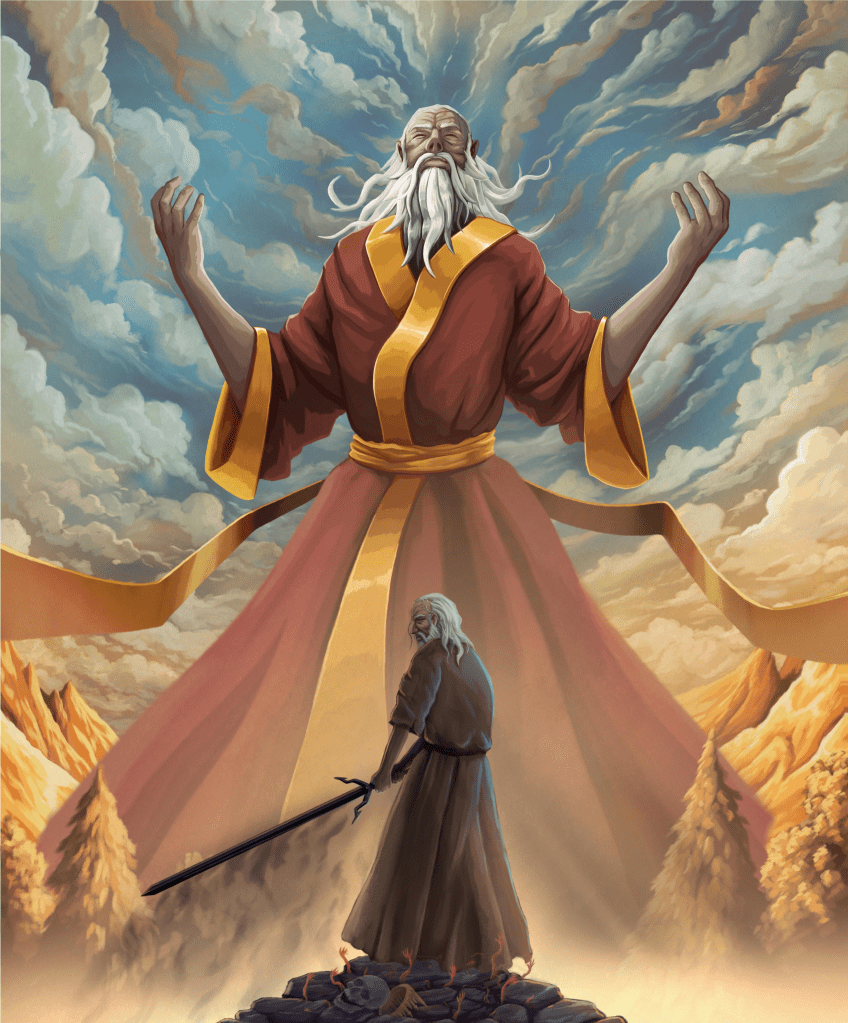
There’s a scene in the book where Wit outlines why he’s writing an agreement with Odium. His goal is to confine Odium to Roshar, so he can’t leave to other planets. Later on, it turns out that Odium’s goal has always been to harden the humans of Roshar to prepare for an invasion of the Cosmere, with Odium and the Singers at the head and humans as the meat. he intends to bring order to the cosmere. When Taravangian kills Rayse and becomes Odium, he sees the same thing: He will save the entire Cosmere. He will save them all.
When Wit first reveals that that’s his plan for Odium, I realized why I had a lot of the criticisms I had for the books in the series. In Words of Radiance, I criticized how people are getting too powerful. There are so many revelations and power increases that I wondered if characters would get too powerful. In Oathbringer, I criticized that the world changes too much. Just when you’re comfortable with the “new normal,” a new change is thrown your way. Here’s what I wrote:
“The world is constantly changing, and I feel like you don’t get enough time to really let these cultural elements inhabit and live in your story. Instead of the Highstorm being an omnipresent presence, it’s been surpassed and doesn’t have as much of an effect anymore. It’s almost trite compared to this Everstorm. Instead of the culture and religion of Vorinism fueling your story, it serves as obstacles in the story for the characters to transcend beyond and overcome. Of course Dalinar would learn to read, we think as modern people! But those cultural habits are ingrained so strongly that they are hard to get rid of. Because of this, it’s hard to really fall in love with this world, to want to live in it the same way you want to live in Middle Earth, because the world isn’t consistent enough throughout the story.”
I now understand why this is. Sanderson never set out to write a story about Vorinism, He never really even intended to write a story about Roshar. He never intended to write a story about Highstorms or Knights Radiant slowly or quickly discovering powers.
This was his goal: In his universe, the Cosmere, he wanted to tell the story of a cosmic war, prompted by Odium, and how that cosmic war came about. The background of that cosmic war are books 1-5 of The Stormlight Archive.
That’s his goal: the war of the Cosmere. That’s his intention. When we find out, for example, that the Ghostbloods are worldhoppers serving another force… When we find out Wit is here in order to confine Odium to this world… When Taravangian ascends to Odium and his goal of Save Them is revealed to now include Save The Universe, the pieces fall into place. This is the story of The Stormlight Archive: A cosmic, cosmere-spanning war, which began on Roshar and spread.
So, who cares if they get over Vorinism? That was just one cog in this greater cosmic-war machine, a result of centuries of myths – and the truths behind the myths are the real important stuff; the cultural rules are just ornamentation to add to the depth. Who cares if the Everstorm totally changes the dynamic on Roshar? We’re leaving Roshar eventually anyways for other planets and other places. Who cares if Knights Radiant get too powerful, too fast? They’re going to come up against greater and greater cosmic forces that they can’t even begin to compete again. Who cares if the world is constantly changing so you can’t feel “at home” in it? This world wasn’t meant to be your home anyways. You are instead meant to feel that the “home” is the Cosmere itself, this entire galaxy of planets with their magic systems and forces and allies and enemies. That is the “setting” of the story.
That’s why, in the beginning of all my previous reviews, I began with a great huge introduction on how the world works – the storms, nature, Spren. In this review, I began with a huge introduction on the Story of the Cosmere, narrowing down eventually to Roshar. Because that’s the real “story” here.
I don’t know if that’s a good or a bad thing. All it does is change the trajectory of the books. You can’t necessarily review a book – or movie, show, video game, artwork, poem, song, or whatever – for what it doesn’t do. All you can critique it for is what it set out to do, and if it did that successfully.
If Sanderson’s goal is to make you love the Cosmere and want to live there, or want to learn more about there, at least for me, he succeeded. I’ve been scrounging through Reddit and The 17th Shard, his official wiki, to find more information and all the tidbits I missed that connect the books to the greater Cosmere. I’ve been obsessing over every hint, trying to figure out what’s happening in the broader story and how this connects to the stories in the other books without giving too much about those books away.
So, I guess I got hooked on the story he always wanted to tell, even if I had some qualms in getting there.
Conclusion
Rhythm of War is the first book in The Stormlight Archive that I don’t just have one or two big-view criticisms for, but instead many more things that just seemed weird or off. It still has high highs, though. And, because of it, I became hooked on the Cosmere and the cosmic war that really is the core of The Stormlight Archive. So, for Sanderson, mission accomplished.

𝙷𝚒! 𝙼𝚢 𝚗𝚊𝚖𝚎 𝚒𝚜 𝙽𝚊𝚝𝚑𝚊𝚗. 𝙸 𝚕𝚘𝚟𝚎 𝚜𝚝𝚘𝚛𝚢𝚝𝚎𝚕𝚕𝚒𝚗𝚐, 𝚕𝚎𝚊𝚛𝚗𝚒𝚗𝚐, 𝚊𝚗𝚍 𝚌𝚛𝚎𝚊𝚝𝚒𝚗𝚐, 𝚊𝚗𝚍 𝚊𝚕𝚜𝚘 𝚕𝚘𝚟𝚎 𝚝𝚘 𝚝𝚊𝚕𝚔 𝚊𝚋𝚘𝚞𝚝 𝚝𝚑𝚎𝚖 (𝚜𝚘𝚖𝚎 𝚠𝚘𝚞𝚕𝚍 𝚜𝚊𝚢 𝚝𝚘𝚘 𝚖𝚞𝚌𝚑!) 𝙵𝚘𝚕𝚕𝚘𝚠 𝚝𝚑𝚒𝚜 𝚋𝚕𝚘𝚐 𝚝𝚘 𝚜𝚎𝚎 𝚖𝚘𝚛𝚎 𝚌𝚘𝚗𝚝𝚎𝚗𝚝!
 Go-To Guru: Film, Literature, Television, and More
Leave a comment