
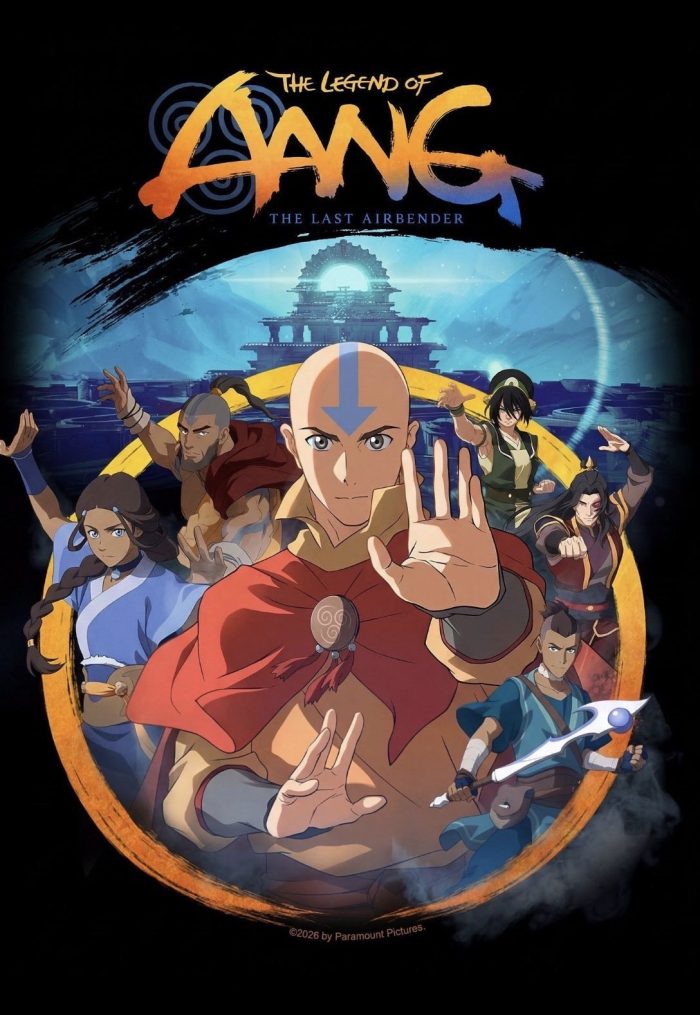
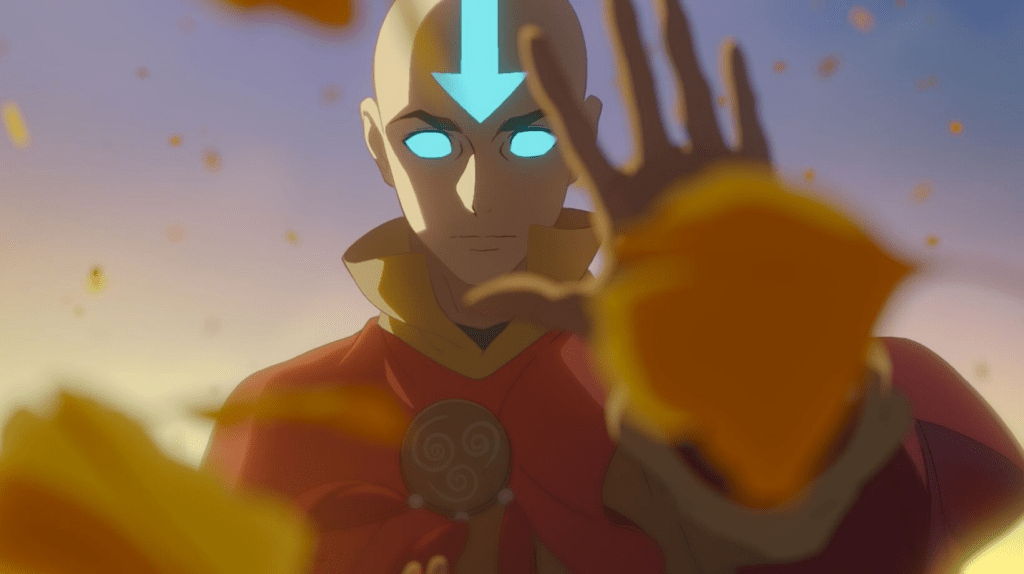
Avatar Aang: The Last Airbender is a 2026 animated film released on Paramount + that is a continuation of the 2005-2008 animated series Avatar: The Last Airbender.
If you want to know more about my history with the Avatar series, read here. It’s my review of Netflix’s live action show, where I discuss many of my thoughts on what makes the original show so unique – and the live-action show trash by comparison. Here’s what I wrote about the original:
One of the things that sets Avatar apart from other shows is creativity within limitations. As a show on a kids’ network, they weren’t really allowed to show killing, and they are restricted to 23 minute episodes. With all of that, though, restraint guides the story, as multiple worldbuilding tidbits and background stories are running at the same time. You get fun kids’ filler episodes, where the main crew goes to a place and does something, but that event informs you in brilliant ways about the world and about these characters you come to love in so little time. In many instances, one line of dialogue informs an entire character’s story. They clearly and concisely tell you pieces, and then you’re able to weave the story together yourself. … It’s the joy of childlike storytelling subtly underpinned with the power of adult storytelling all mixed into one.
In full disclosure, I despise the 2012-2014 sequel show to Avatar, titled The Legend of Korra. I think what many people think as “deep” writing is really far less nuanced, far more inconsistent, and far more annoying, especially where worldbuilding is concerned. Because of that, I always feared what a sequel movie to the original Avatar show would be.
As a long line of movie directors and showrunners can demonstrate, previous quality is no guarantee of present quality. George Lucas, James Cameron, Ridley Scott, and Christopher Nolan have all had hit-or-miss experiences, especially as they got older. And with a poorly written show in-between, and without one-third of their creative team (the same third missing on Korra, although Aaron Ehasz’s next work The Dragon Prince also did not reach the heights of Avatar), I doubted Bryan Konietzko and Michael DiMartino’s ability to create a new movie.
My expectations were about matched.
The Story
Here’s a summary of Avatar Aang if you haven’t seen it, if you need a refresher, or if you need to see some flaws you didn’t see before.
For the world itself, you can watch the show intro here. It’s been called one of the best intros of all time for neatly summarizing the plot of the show while bringing you up to speed on what happens next.
If you’re too impatient for that, Avatar: The Last Airbender takes place in a semi-steampunk fantasy setting. There are four nations – the proud and honorable Southern and Northern Water Tribes, the grand and varied Earth Kingdom, the power-hungry Fire Nation, and the temple-dwelling Air Nomads. Each contains people who use Eastern Asian martial arts to manipulate their elements: Water, Earth, Fire, Air. Those people are called Benders. The Avatar, the only human who can bend all four elements, is reincarnated in each nation in the cycle in that order. The Avatar keeps the balance of the world.
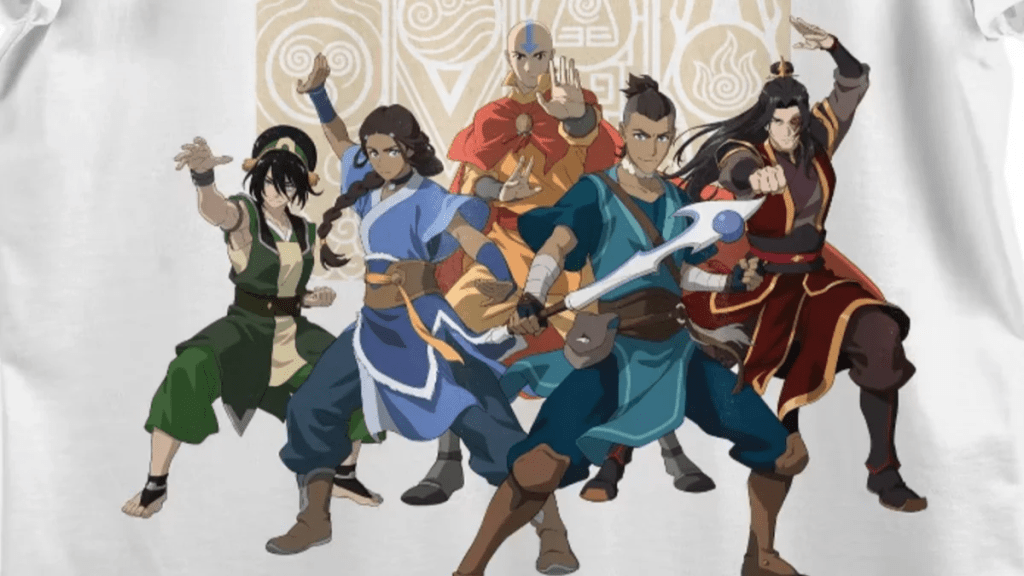
When Aang, an Air Nomad, finds out he is the Avatar, he runs away. The Fire Nation, knowing that the Avatar must be an air nomad, plans a coordinated attack and genocides all the Air Nomads. In a storm, Aang is knocked into the water, where his Avatar State keeps him in stasis for a hundred years. Once he awakens, he assembles a group of friends affectionately referred to by fans (and once as a joke in the show) as the “Gaang” to defeat the Fire Nation once and for all and bring balance to the world.
Avatar Aang takes place thirteen years after the show (this isn’t referenced in the movie but is in the promotional material). The Fire Nation has been defeated, and Aang’s friends now lead the respective nations: Zuko is the Fire Lord, Toph leads a school of special earthbenders, Sokka leads the Southern Water Tribe, and Katara leads Republic City, a city created when settlers from the Fire Nation colonized the Earth Kingdom and after a hundred years the people there decided to exist as their own state.
The movie begins with a flashback from Aang from his childhood, where we are shown a dream with Aang feeling guilty about the extermination of his people. Next, Aang goes to the Southern Air Temple, his own home, to search for relics as he seeks to rebuild the Air Nomad culture. While finding relics, he is ambushed by four elite fighters from a group called the Denied. They are all nonbenders who believe benders oppress them. They steal one particular artifact that Aang just so happened to grab when they saw him, a statue to a woman called Sonem. Aang is seriously injured in the fight.
Back in Republic City, Aang and Katara decide to assemble the “Gaang.” Aang searches through his past lives and discovers Sonem was a previous Avatar, but no one has seen her. One Avatar knows she is on a really tall mountain, Mount Baihu. Traveling there, Aang finds another airbender in stasis, just like he was. He turns out to be Tagah. Tagah was friends with Sonem thousands of years ago. Sonem created a staff that funneled the power of the Spirit World from the Lion Turtles (yes, that is a sentence that only partially makes sense in the context of the show) to grant people airbending. Sonem hid the staff on the far side of the planet through a gigantic storm.
With the Gaang assembled, they race to the storm on the Fire Lord’s airship. Aang learns more about airbending from Tagah, and how in his time the Airbenders were almost wiped out as well. They had a capital city, Jharana, which was their haven until the Earth Tribes, combined under one King who rose to power, attacked. Tagah has disdain for the other nations, believing in his time that they all betrayed the Air Nomads. Aang reassures him they work together now. They are ambushed by the Denied, using the map found in Sonem’s statue to also head into the storm. When Tagah almost kills all the Denied, Aang stops him. Using their combined powers, Tagah and Aang do some crazy ridiculous bending (as do Zuko, Toph, and Katara, with Sokka flying the airship) to make it through the storm. On the other side, they find the Lion Turtle graveyard. Tagah turns on them, killing all of the Gaang and Aang once he uses all four elements to recover the staff. There’s magic spirit water in the Lion Turtle cove, though, so Katara heals them all.
Tagah finds the Denied and grants them all airbending abilites with the staff. Aang is finally able to speak to Sonem, who tells him that Tagah turned evil after seeing the destruction the newly-combined Earth Tribes did to the peace-seeking Air Nomads. Tagah used the staff in the Air Temple located in Jharana to transform himself into a human-spirit hybrid with immense power. Sonem was mortally wounded trapping Tagah in stasis in a gigantic mountain. So, she… teleports her city to the Spirit World, moves the Air Nomads to remote air temples, and then makes the pilgrimage to the Lion Turtle graveyard where she dies after making an intricate locking mechanism for the staff. Sonem says Tagah will now bring her city back from the Spirit World to destroy Republic City, as Tagah views Airbenders as the supreme culture that should rule all the others and Republic City is an offense to his view.
Teleporting into the Spirit World, the Gaang finds a friendly spirit who will transport them to Jharana, and then from there to Republic City where the Denied are master airbenders and Tagah is waiting till just the right time to enter the temple and become a demon monster. The Gaang battle the Denied while Aang battles Tagah, who does become a demon monster. Sokka saves the rest of the Gaang with a wacky on the spot invention while Aang recaptures the staff and becomes a good spirit-human hybrid. He’s close to killing Tagah for ruining his dream of bringing back the Air Nomads when he realizes he’s becoming a demon-spirit-monster too. So, he uses his powers to break the staff instead, vanishing Jharana, getting rid of all the airbender’s powers, and turning Tagah into mist with Jharana.
Now with an Air Sanctuary in Republic City, Aang concludes with Sonem that while Airbenders might be gone, Air Nomad culture can be passed on and their values can impact the world, as they already have at Republic City. Traveling to a remote Air Temple with his new acolytes, they find a herd of Sky Bison.
This Movie Doesn’t Make Sense
First, on its own merits, this movie does not make sense.
First, the backstory does not make sense. The entire premise is that Avatar Sonem was “mortally wounded” by Tagah in their fight. But apparently, she was still able to
1) trap him in a stasis state (something that Aang did to himself and Appa, not to another person separate from himself)
2) transport Jhanara to the spirit world (which we know is possible – Wan Shi Tong did it to his Spirit Library – but he’s a, you know, powerful spirit)
3) relocate all the Air Nomads
4) travel several days if not weeks through the crazy cyclone storm to the Lion Turtle graveyard (which we know took two people to do, even if one was the Avatar)
5) build a temple and an ornate Avatar lock system to hide the staff.
I’m sorry, what? How does someone who is “mortally wounded” do all of that? And if someone is wounded enough to do that, shouldn’t he/she know a Waterbender who can heal him/her? Avatars needed masters from all four nations, so Sonem has to know somebody friendly in the Water Tribe(s). And if Sonem was so scared of that staff, why did she not just… you know… destroy it like Aang did? She says something about Aang being stronger than she was, but we don’t know what she was referring to when she said that. And if you are going to keep it unbroken, why leave a map to it in a tiny little statue to yourself? Did she create the map, or someone else? Why is it not in some vault? And paper degrades over time. How did the map survive that long?
But not just there. We hear a little about the Denied, a group of anti-benders. Why are they all against bending? Where do they get all their resources? How did this group appear? But then, when they do appear, why do they all just instantly become master airbenders? Bending takes years of training to master it, either overcoming or working with the quirks of your own personality and culture. Some never become truly great. How do they all become so powerful they can beat the Gaang? Not only that, why in the world do they agree to work with Tagah? He just almost destroyed their ships. He is a bender himself. Why would you want to work for him? And then he rats off some mumbo-jumbo about bringing in a city from the Spirit World to crush Republic City, and you believe him? Why would you work with him? Why would you trust him?
Then there’s the questions of the stupid Lion Turtle Spirit water. We’ve seen spirit-touched water do crazy things. In the original show, Katara has a small container on a necklace with water from the Northern Oasis. That spirit water is able to revive Aang when he is struck by Azula’s lightning. We know for a fact that he did not die, because if he did, the Avatar cycle would be over because he was killed in the avatar state. Yet then, Katara falls into spirit water, and she is dead, she is somehow revived? And she is able to revive everyone else from the dead? And Aang dies, so why is he not reincarnated? It’s not a timing thing: we know, Avatar death = reincarnated, no matter what. And it has to be long enough for Katara to drag his body to that spirit water. So he shouldn’t even be able to be revived; or if he is, he is no longer the Avatar, however that works. So, stupid spirit water is a Deus Ex machina.
The plot has so. Many. Questions. This movie is broken, basically to the core. The setup cannot happen as it does. The villains should not act like they do. Miracle water comes in and saves our heroes without any consequences. On its own, as a movie, this movie doesn’t work.
This Movie Breaks Avatar
But it isn’t just a failure as a movie. This movie is a failure because it contradicts so much of Avatar.
Some of these contradictions already existed in The Legend of Korra, especially the Spirit World. One example is spirits being “Evil” or “Good,” and “good” or “evil” spiritual energy. Koh is not an “evil” spirit. He just is. Twi is not an “evil” spirit. She just is. Hai Bei is not an evil spirit. He just is. And yet somehow there’s a corrupting, evil, spiritual energy that turns Tagah into an evil spirit monster like Unalaaq in Korra was an evil spirit monster thing. There being another “airbender” at all contradicts the entire premise and title of Avatar. A question that Korra never really solved was why Aang didn’t just give people airbending if he could now energybend. Say what you want – “Well, if he didn’t do it, therefore he couldn’t have!” – but the rules are never discussed. If it was even a possibility, wouldn’t Aang has spent a lifetime trying to figure out how to do it? And now that he knows there was a special spirit staff with Lion Turtle power, why didn’t he try even harder to do it? Time and space has always been different in the Spirit World, yet they teleport across the entire planet – because remember, the lion turtle graveyard is the far side of the planet – in order to just so happen to reach Republic City? The Spirit World is broken.
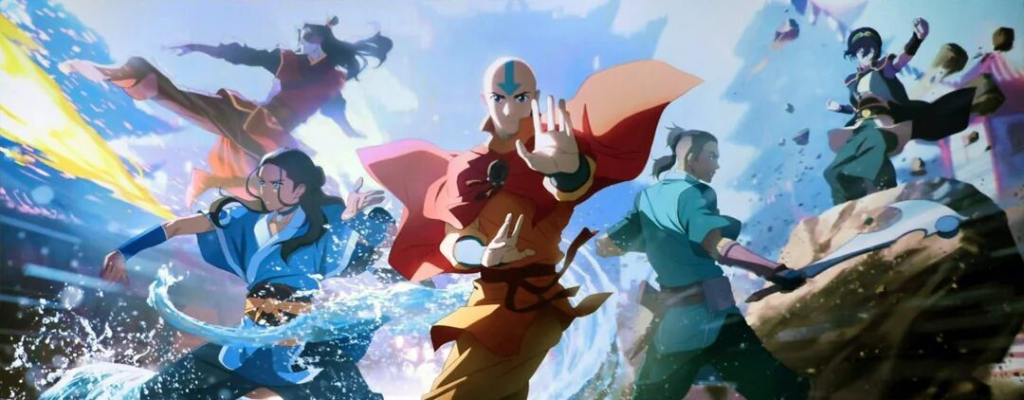
There are also the bending problems. My goodness, the extremely power up the bending in this movie. Tagah is able to use airbending to keep a mountain – an entire mountain – from falling on Aang and him. In the original show, except for one time, metal bending requires touch in order to bend because that’s the only way to sense the purified earth inside. Korra broke this already, but Toph metal bends entire structures without touching them. Katara is able to waterbend an ocean Moses-parting-the-sea style so the airship can escape. Two airbenders can now throw themselves through the air, when airbenders could never fly, only use gliders (Zaheer flying is still stuipd). Two airbenders can now stop a cyclone – a hurricane-sized cyclone. Tagah now has an “airbending gun” that can shoot people and kill them, apparently. The motions and the sounds are extremely similar to lightning bending, which is just cheap to me. Also, all the bending looks very similar. There aren’t the martial arts differences that separated the bending as in the original show. It’s mostly just punches and kicks.
At the same time, other abilites are downgraded. The Avatar State is always terrifying in the original show when it’s unleashed. The final battle between Aang and Ozai demonstrates that extremely well. Even a Sozin’s Comet-powered firebender who is the best in the entire world – Iroh admits so – can’t stand against it. Yet Tagah can slap around Aang in the Avatar State? He can also slap around the entire Gaang?
This show isn’t even original. It’s basically just a mix of the plots of season 2 and season 3 of Korra; an evil airbender, Spirit World powers, bringing back airbenders.
The most egregious to me are the character contradictions. I’ve written before about problems with sequels / prequels. Sequels or prequels often have the problem of flattening or simplifying characters, taking one character trait and focusing on it rather than the well-rounded character they were. That is all over this movie.
One facet of Aang’s character was his guilt over running away. That was one facet, though. He was also an incurable prankster. He was also peace-loving, seeking to resolve conflict in any way but violence. He was also clever, often using his abilities and wits to solve problems rather than brute force. He was also intensely loyal to his friends, so much so that he would leave learning the Avatar State in order to save Katara when she was in danger. All of these are who Aang is. And yet, in this sequel, they focus on one thing: His guilt over his past. All other traits are downplayed. Loyalty to his friends? He risks all their lives! Peace-loving? That comes up in refusing to fight the Denied at first and keeping Tagah from killing their airships, so that’s there somewhat. Prankster? He really only has one or two jokes in the entire movie! Clever? He doesn’t solve any of his challenges through cleverness rather than force. Basically, Aang is flattened and made one-dimensional.
Same is true of everyone else. Toph? Yeah, there are a couple times he notices how handsome or attracitve some characters are. But she’s also tough, strong, intelligent, boastful, proud, occasionally morally dubious, and self-reliant to a fault. Here, she just comments on how attractive Tagah is and his big arms. And three times, she says, “I’m the greatest earthbender in the world!” That happens in the show after an amazing moment. Here, it’s just a joke and exaggeration of her traits. Sokka? Yeah, he’s often the butt of jokes and he makes machines. But he’s also a brilliant planner, a great strategist, keeps his cool in intense situations as the show goes on, and a warrior. Here, he’s mostly just the butt of a lot – I mean a lot – of jokes and routinely panics in intense situations, like the airship on the ocean. Zuko? He doesn’t even really say or do anything. Katara? She just cares about Aang and is suspicious of outsiders. None of the main cast have much to do, and they are just fan service rather than seeming like the actual, fully-fleshed-out, three-dimensional people that the three seasons of the show created.
That is what is most egregious about this movie. It’s not just that the plot is broken. It is. It’s not just that the world is broken, or the bending is broken. They are. But the characters are not the same characters as in Avatar. They are bastardized versions of themselves, taken apart and put back together with most of their traits gone and only an exaggerated trait or two remaining.
Don’t Watch It
Don’t watch Avatar Aang. Go watch the original show again. This so taints the characters like Legend of Korra already did that it is not worth it. It is a broken movie on its own terms. It’s a broken movie when compared to the original show. There really isn’t any reason to watch or support it. Just watch Avatar: The Last Airbender.
𝙷𝚒! 𝙼𝚢 𝚗𝚊𝚖𝚎 𝚒𝚜 𝙽𝚊𝚝𝚑𝚊𝚗. 𝙸 𝚕𝚘𝚟𝚎 𝚜𝚝𝚘𝚛𝚢𝚝𝚎𝚕𝚕𝚒𝚗𝚐, 𝚕𝚎𝚊𝚛𝚗𝚒𝚗𝚐, 𝚊𝚗𝚍 𝚌𝚛𝚎𝚊𝚝𝚒𝚗𝚐, 𝚊𝚗𝚍 𝚊𝚕𝚜𝚘 𝚕𝚘𝚟𝚎 𝚝𝚘 𝚝𝚊𝚕𝚔 𝚊𝚋𝚘𝚞𝚝 𝚝𝚑𝚎𝚖 (𝚜𝚘𝚖𝚎 𝚠𝚘𝚞𝚕𝚍 𝚜𝚊𝚢 𝚝𝚘𝚘 𝚖𝚞𝚌𝚑!) 𝙵𝚘𝚕𝚕𝚘𝚠 𝚝𝚑𝚒𝚜 𝚋𝚕𝚘𝚐 𝚝𝚘 𝚜𝚎𝚎 𝚖𝚘𝚛𝚎 𝚌𝚘𝚗𝚝𝚎𝚗𝚝!


Leave a comment